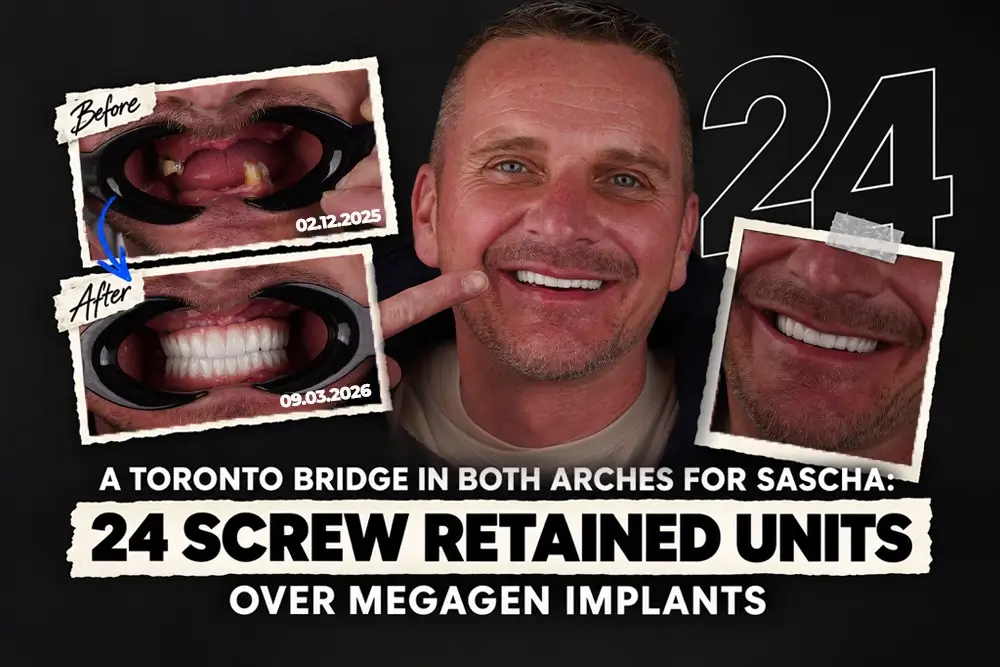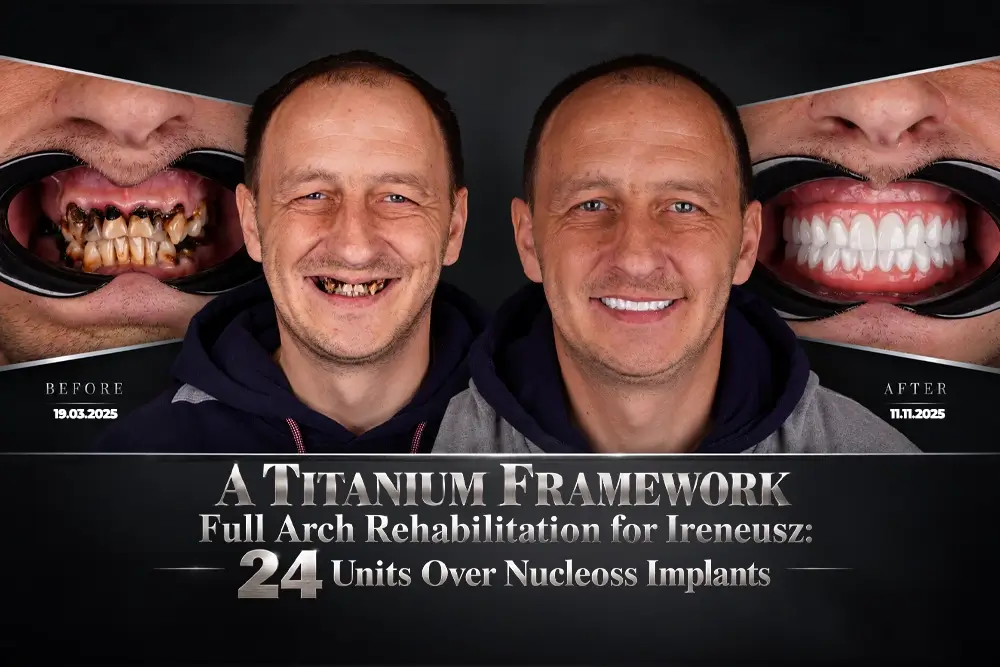
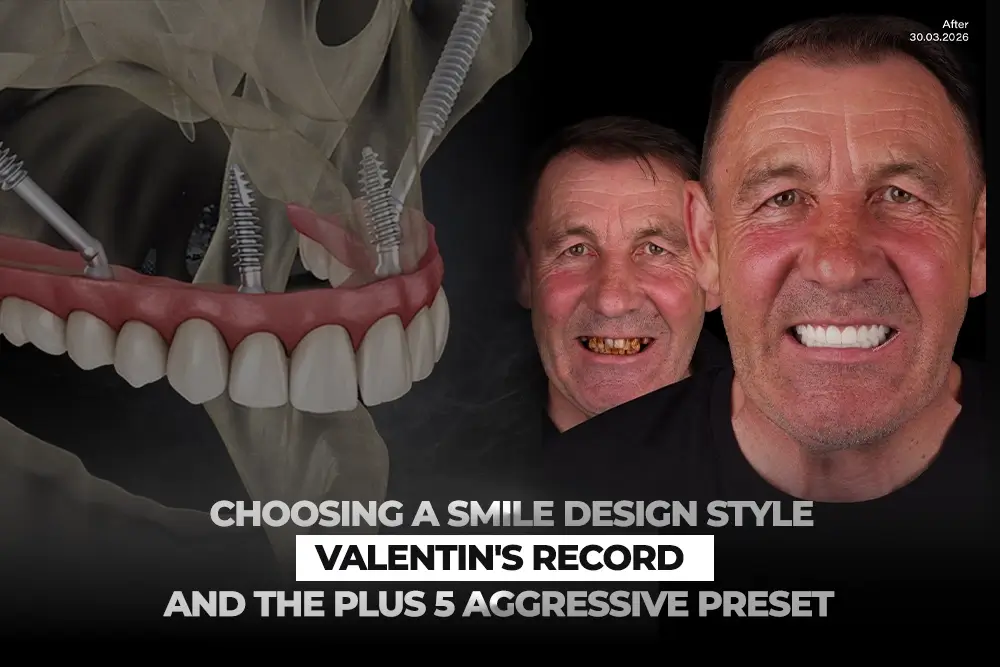
Choosing a smile design style is difficult to do in the abstract because an open ended question about tooth shape has no obvious answer. International Plus addresses that by grouping designs into named presets inside its digital workflow. Valentin was treated as a German speaking patient and his record lists one of them by name: Plus 5 aggressive in shade 1M2. This case study explains what that entry means.
Key Takeaways
- The challenge: Tooth shape is difficult for a patient to specify in words before anything exists to look at.
- The solution: A library of named preset designs held inside the clinic’s digital workflow, selected and recorded before production.
- The technique: 24 zirconia units in shade 1M2, recorded as the Plus 5 aggressive style over Bego and Nobel Biocare implants with a night guard at delivery.
- The outcome: A design choice written into the file as a named entry rather than as a description.
What a Preset Smile Design Style Is
A preset style is a prepared tooth design held in a library and applied to a case rather than drawn from scratch. International Plus builds its own library inside exocad, the design software used in the laboratory stage.
The purpose is narrowing. A patient asked to describe tooth shape in the abstract has nothing to anchor to while a patient shown a small set of named options can compare them directly. Research on smile perception has found that laypeople and dental professionals assess the same smile differently (Cheng JH, et al., 2023). A choice shown to the patient therefore carries more information than a choice assumed on their behalf.
In practice our clinic records the chosen style by name in the patient file. Readers wanting the wider process will find it in our article on how a new smile is planned.
Valentin’s Record and What Plus 5 Aggressive Means
The entry in this file reads Plus 5 aggressive. Plus 5 names the design family and the aggressive variant names the version within it so one short line carries both the family and the character of the teeth produced.
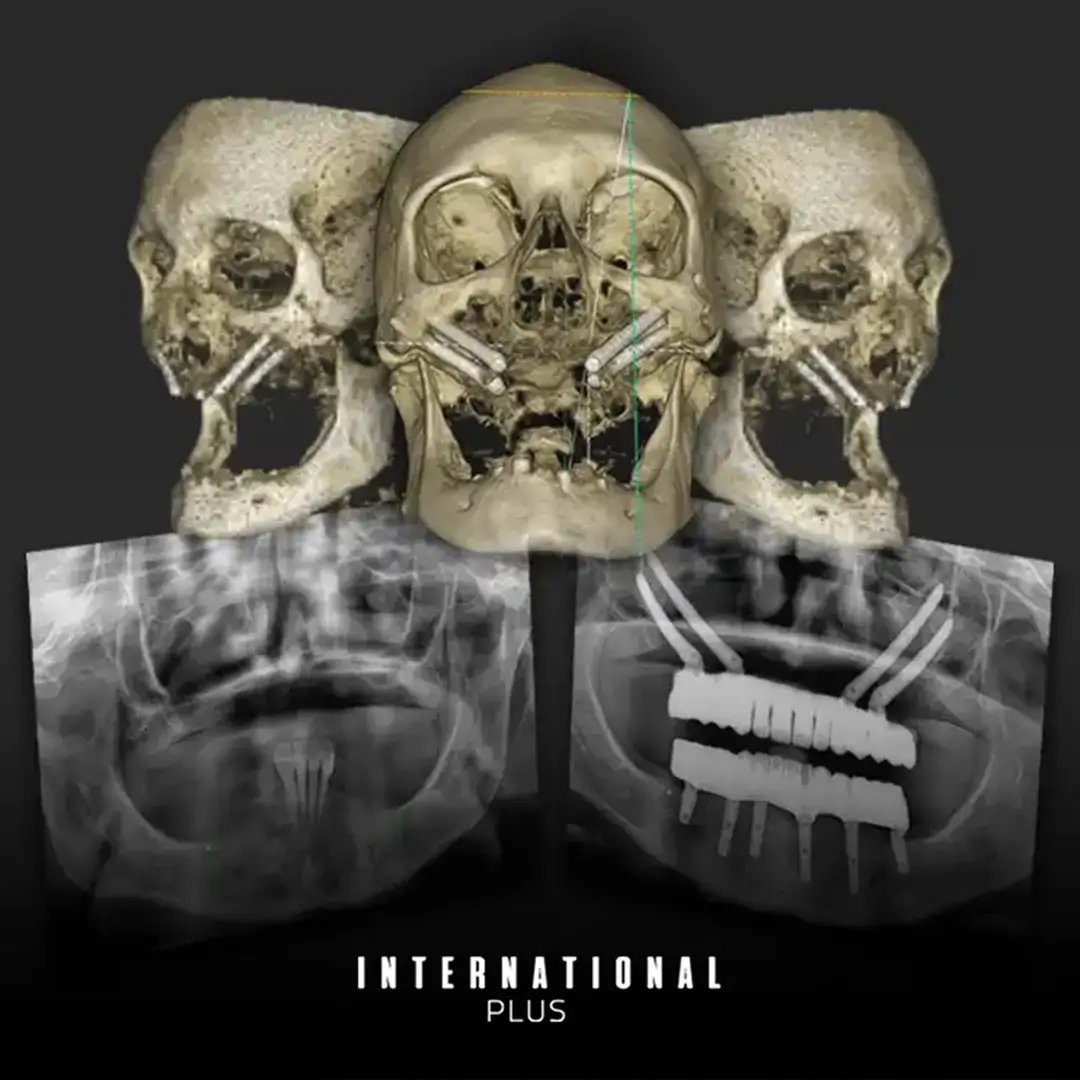
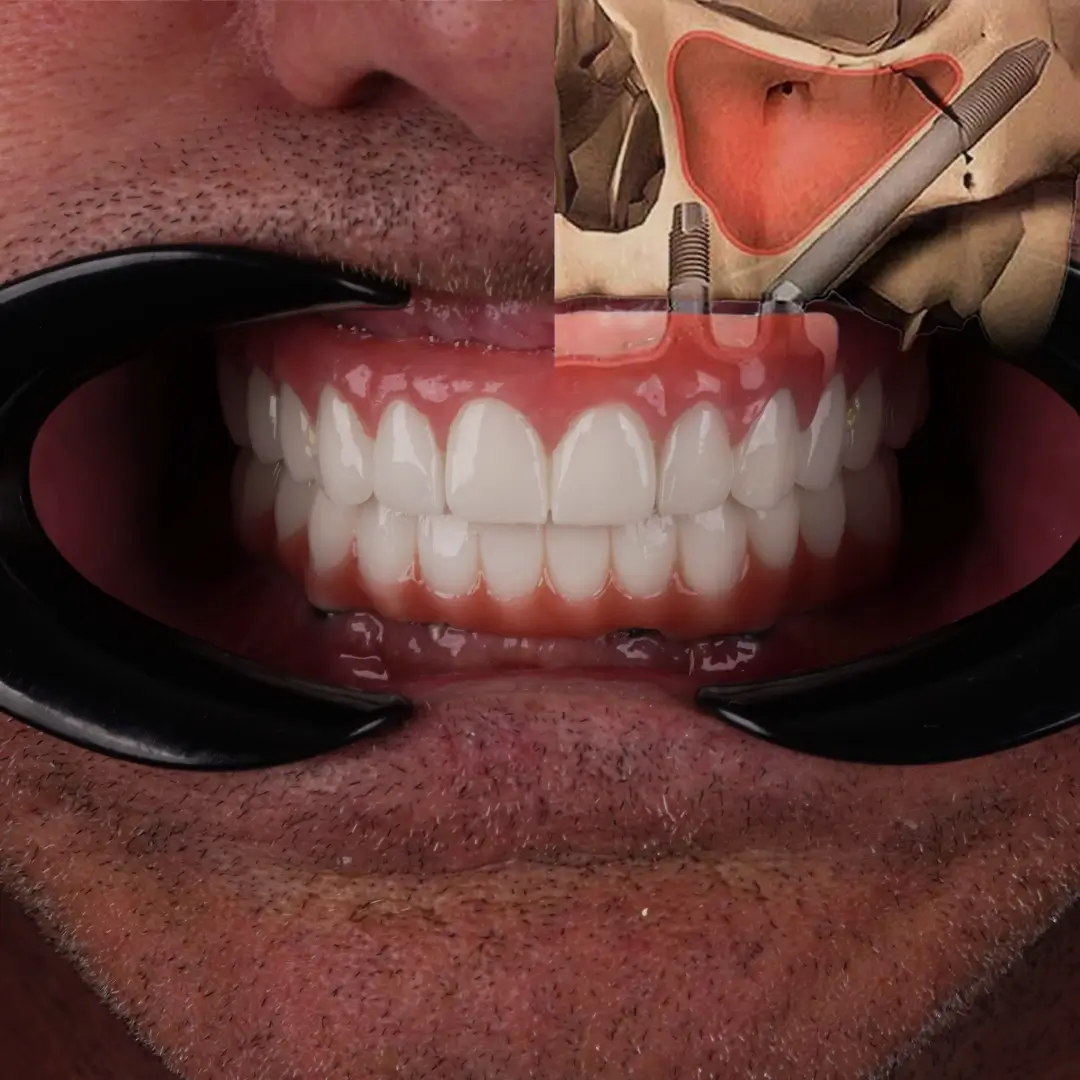
Twenty four zirconia units are listed in shade 1M2 with Bego and Nobel Biocare implants recorded as the supporting systems. The upper arch carries a metal framework and the lower arch is listed as screw retained.
Choosing a smile design style this way turns an open question into a selection. According to research on smile perception, laypeople and dental professionals rate the same arrangement differently (Saffarpour A, et al., 2016) so a shared name is more reliable than a shared adjective. In practice our clinic records the style, the shade and the implant systems as separate fields.
| Record | Detail |
|—|—|
| Zirconia units | 24 |
| Smile design style | Plus 5 aggressive |
| Shade | 1M2 |
| Implant systems | Bego and Nobel Biocare |
| Upper arch | Metal framework |
| Lower arch | Screw retained |
| Appliance | Night guard fitted at delivery |
Why a Named Style Travels Better Than a Described One
A description written in a file is read differently by each person who opens it. “Natural looking” means one thing to a patient and another to a technician who has to cut a shape from a block.
Studies show that perception thresholds for dental aesthetics differ between laypersons and professionals (Alrbata RH, et al., 2020) and separate work has compared how each group rates smile attractiveness (Ravichandra S, et al., 2025). A named preset shortens that translation step because the name points at a design rather than at an adjective.
A library limits choice compared with a design drawn from nothing but it is used on these plans because every party then reads the same entry the same way. Our clinic records the style alongside the shade so neither is left to interpretation.
How the Style Reaches the Finished Teeth
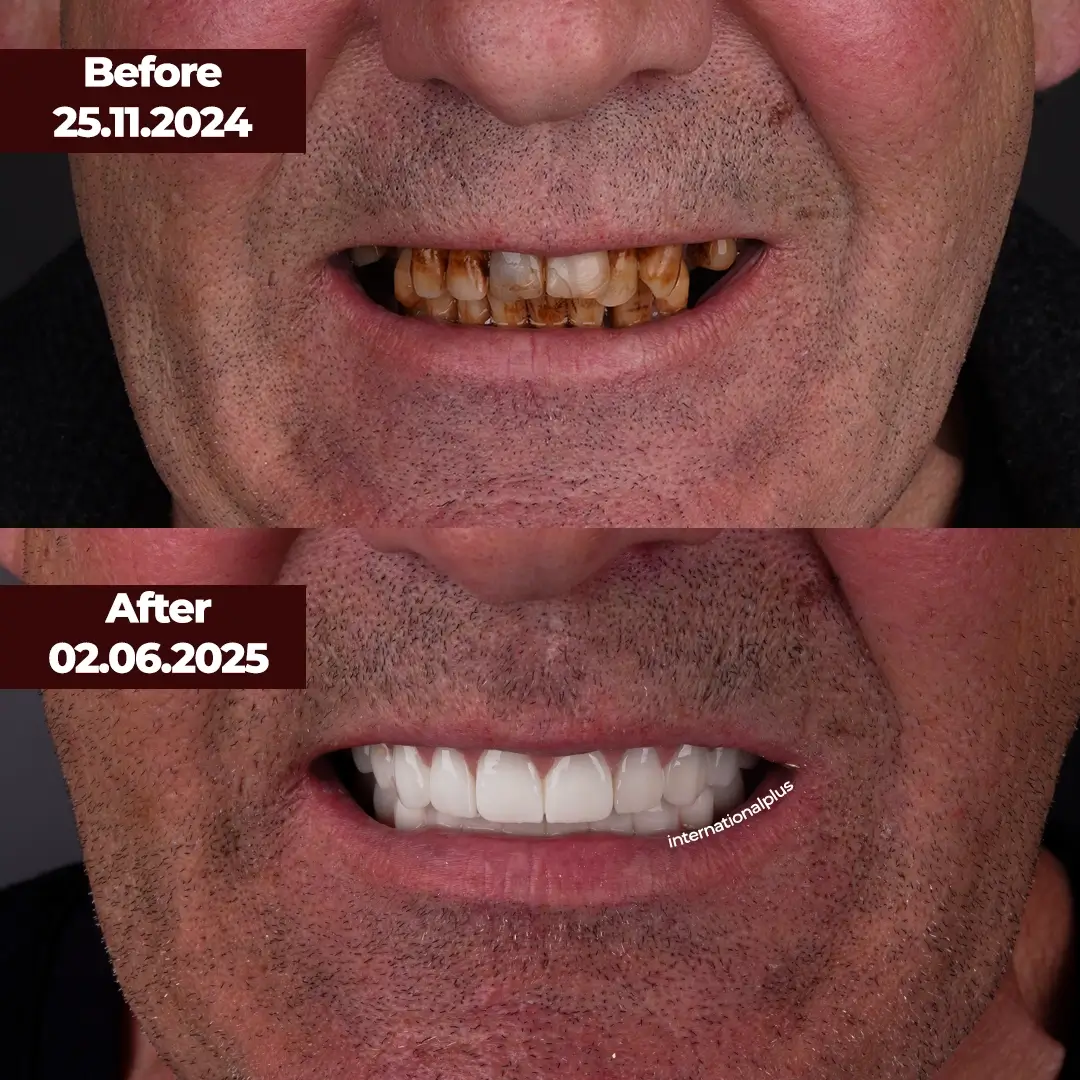
The named style governs tooth shape and proportion. The shade, recorded separately as 1M2, governs colour. Keeping the two settings apart means one can be adjusted without disturbing the other.
Digital planning records the midline and the lip line before any ceramic is produced and virtual smile design systems have been reviewed in the dental literature (Zimmermann M, et al., 2015). Published workflow descriptions set out how a case moves between clinic and laboratory during that process (Ntovas P, et al., 2023).
Units were produced in the clinic’s own digital laboratory, which is where the exocad library sits. Smile planning at the clinic is offered as digital smile design and as a full Hollywood smile.
What the Record Shows
Valentin’s file lists a style, a shade, two implant systems and the arrangement used in each arch. Every one of those is a named entry rather than a description, which is what a clinician opening the file years later has to work from.
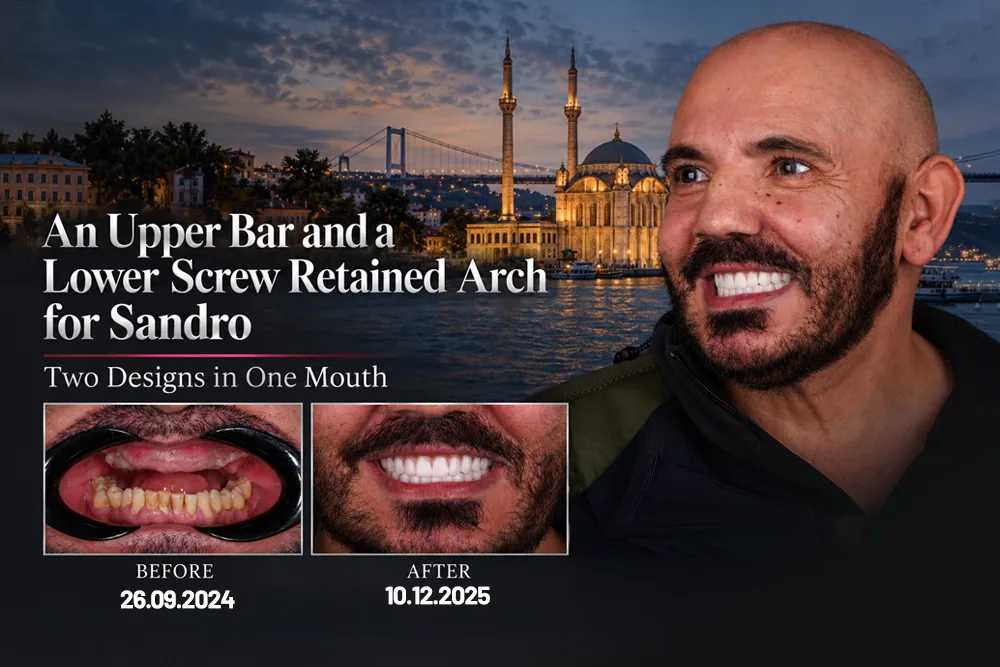
Styles appear across the clinic’s other recorded cases as well. Plus 1 is listed in our two design case and Plus 3 in our titanium framework case so the same library runs behind different treatments.
This is one patient’s recorded outcome and individual results may vary. International Plus has treated more than 200,000 patients from 140+ countries since 2014 and holds a rating of 4.8 out of 5 across 5,504 reviews. No clinic can promise that a given style will suit a given face because the design is chosen against the face it sits in.
Book a consultation with International Plus if you want to see which design styles would suit your own smile.
Frequently Asked Questions
What is a smile design style at International Plus?
A style is a prepared tooth design held in a library and applied to a case rather than drawn from scratch each time. The clinic builds its own library inside exocad, the laboratory design software. Each style is recorded by name in the patient file alongside the shade.
Why does the clinic use preset styles instead of designing from scratch?
Because tooth shape is difficult to specify in words. A patient asked to describe a smile in the abstract has nothing to compare against while a patient shown a small set of named options can judge them directly. The name then travels into the record without being reinterpreted.
Does the style decide the colour of the teeth?
No. The style governs tooth shape and proportion while the shade governs colour and the two are recorded separately. In this file the style reads Plus 5 aggressive and the shade reads 1M2 so either setting can be adjusted without disturbing the other one.
Can a patient change the style after seeing it?
The design stage exists so choices are made before anything permanent is produced. A style is selected and recorded ahead of the laboratory stage and changes requested at that point cost time rather than tooth structure. The point of planning first is exactly that.
What does aggressive mean as a style name?
It names a variant within the Plus 5 family rather than describing a treatment. Style names in the library identify the character of the tooth shapes produced. The term is an internal label used so the file, the clinician and the laboratory all refer to the same design.
Reviewed by Dr. Eren Gülbahar
References
- Cheng JH, et al. J Dent Sci. 2023. PMC10068377
- Alrbata RH, et al. Int J Dent. 2020. PMC7603600
- Ravichandra S, et al. Cureus. 2025. PMC12591280
- Saffarpour A, et al. J Dent (Tehran). 2016. PMC5139935
- Zimmermann M, et al. Int J Comput Dent. 2015. PMID: 26734665
- Ntovas P, et al. Int J Esthet Dent. 2023. PMID: 37819562
Follow us on Social Media
internationalplusofficial
internationalplus
internationalplusdental
This content is written, reviewed, and approved by the International Plus Medical Review Board to ensure clinical accuracy and adherence to strict editorial standards. All medical information is regularly monitored, audited and updated in light of the latest scientific advancements.
However the information provided here is for general informational purposes only and cannot be used for self diagnosis or making individual health interpretations. Results of medical treatments depend on individual anatomy and the unique healing process of each patient. This information should not replace a personal consultation with a qualified healthcare professional. To understand the best options for your specific needs and to receive a personalized treatment plan, we invite you to book a free consultation with the expert medical team at International Plus.
I am a healthcare professional with over 4 years of experience in dentistry, specializing in prosthetic dental treatment and implant-based applications. Since 2024, I have been serving as chief physician, leading clinical management, team coordination, and international patient processes. With my B2-level English proficiency, I am able to communicate effectively with international patients. I am a patient-centered, innovative, and solution-oriented dentist who prioritizes patient satisfaction.