Bad breath is one of the few dental problems other people notice long before you do. Around one adult in four lives with persistent oral malodour. The useful part is that roughly 85% of cases start inside the mouth, which makes most of them genuinely fixable. This International Plus guide explains where the smell actually comes from and why brushing alone rarely removes it. You will also find how to read a mouthwash or toothpaste label by active ingredient. The guide covers what tonsils or reflux contribute and when persistent bad breath deserves a medical opinion rather than another mint.
Key Takeaways
- Roughly 85% of bad breath starts inside the mouth, most often from bacteria coating the back of the tongue.
- Brushing teeth misses the tongue surface entirely, which is why odour returns within two to three hours.
- Choose rinses by active ingredient: zinc neutralises sulphur gases while chlorhexidine or CPC reduce the bacteria producing them.
- Dry mouth is the most under-recognised driver because saliva is the mouth’s own cleaning and oxygenating system.
- Odour that persists despite excellent hygiene needs a medical review rather than stronger mints.
What Causes Bad Breath?
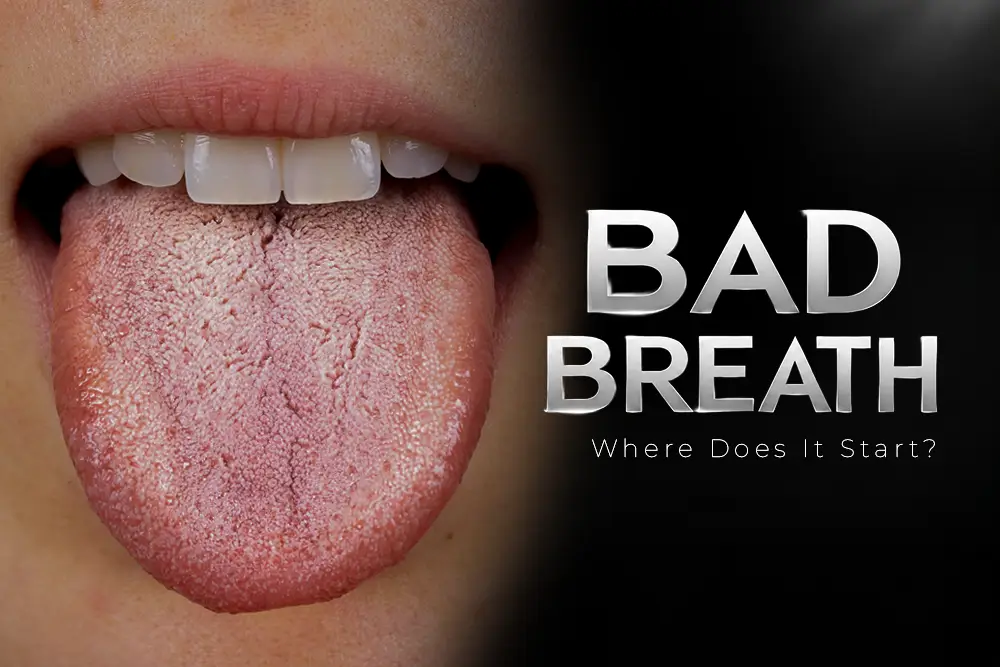
Bad breath is caused mainly by anaerobic bacteria breaking down protein and releasing volatile sulphur compounds. The largest single reservoir is the coated back surface of the tongue. Gum disease and dry mouth feed the same process as does food debris trapped between teeth.
According to a 2020 literature review by Wu et al in the Australian Dental Journal about 85% of genuine halitosis has an intraoral source. The remaining share traces to the nose, sinuses or wider medical conditions. Research by Li et al in 2023 linked odour intensity to the composition of the tongue microbiota rather than to raw bacterial count. In practice our clinical team asks patients to run a clean spoon along the back of the tongue and smell the residue after 30 seconds. The result settles the question of origin faster than any questionnaire.
Why Does My Breath Smell So Bad Even After Brushing?
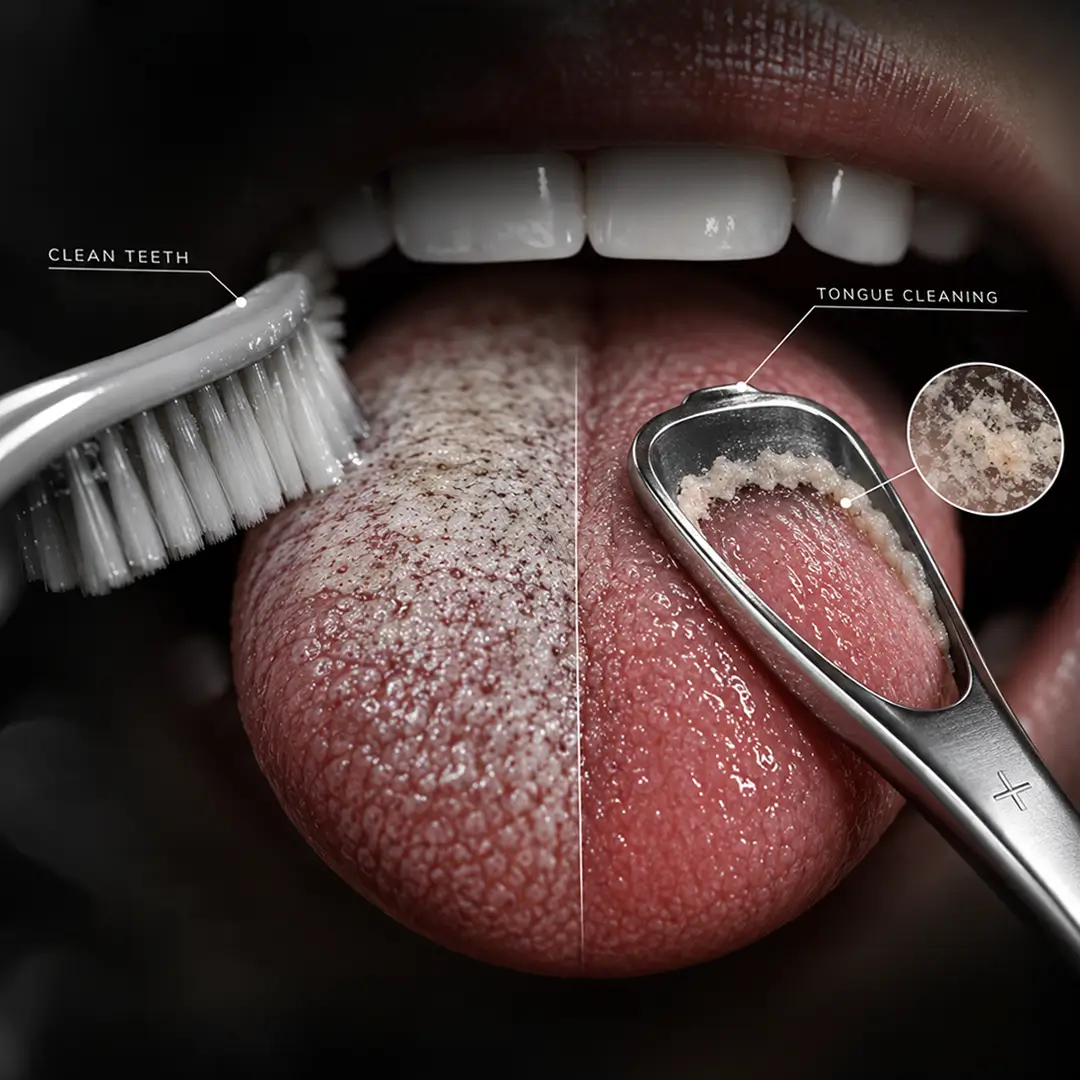
Brushing removes plaque from teeth yet leaves the tongue almost untouched. The tongue holds the heaviest bacterial load in the mouth. Odour therefore returns within two to three hours. Overnight dryness concentrates the same bacteria, which is why morning breath appears even in perfectly healthy mouths.
Tongue cleaning changes the picture more than any rinse. A 2019 Cochrane review by Kumbargere Nagraj et al found mechanical tongue cleaning combined with an antibacterial mouthrinse reduced odour more than either measure alone. Studies found the improvement lasts only while the routine continues. Saliva flow matters just as much because saliva carries the oxygen anaerobic bacteria cannot tolerate. Night-time flow falls sharply so 8 hours of sleep produce the classic morning smell. Patients in our clinic who add 20 seconds of tongue scraping report the clearest change within one week. Persistent dry mouth needs separate attention.
What Do Different Types of Bad Breath Smells Suggest?
Different odours point toward different sources. A rotten egg or sulphur smell indicates oral bacteria. A sweet acetone note may reflect uncontrolled diabetes. A fishy or ammonia smell can accompany advanced kidney disease. A sour smell often signals reflux. Only a doctor can confirm any of these patterns.
| Smell | Most likely source | Next step |
| Rotten eggs or sulphur | Tongue coating or gum disease | Dental assessment |
| Sour or acidic | Acid reflux | Medical review of reflux |
| Sweet or acetone | Possible uncontrolled diabetes | Prompt medical testing |
| Fishy or ammonia | Possible advanced kidney disease | Prompt medical assessment |
A smell is a prompt for testing, never a diagnosis in itself.
Odour type narrows the search but proves nothing alone. According to Khounganian et al in 2023, systemic conditions account for only a small minority of cases. Diet explains many short-lived changes: garlic compounds circulate in the blood for up to 72 hours and leave through the lungs so brushing cannot touch them. Our clinical team treats any non-oral pattern as a referral rather than a dental problem. Sudden persistent odour alongside weight loss or unusual thirst deserves medical testing within the same week.
What Is the Best Mouthwash for Bad Breath?
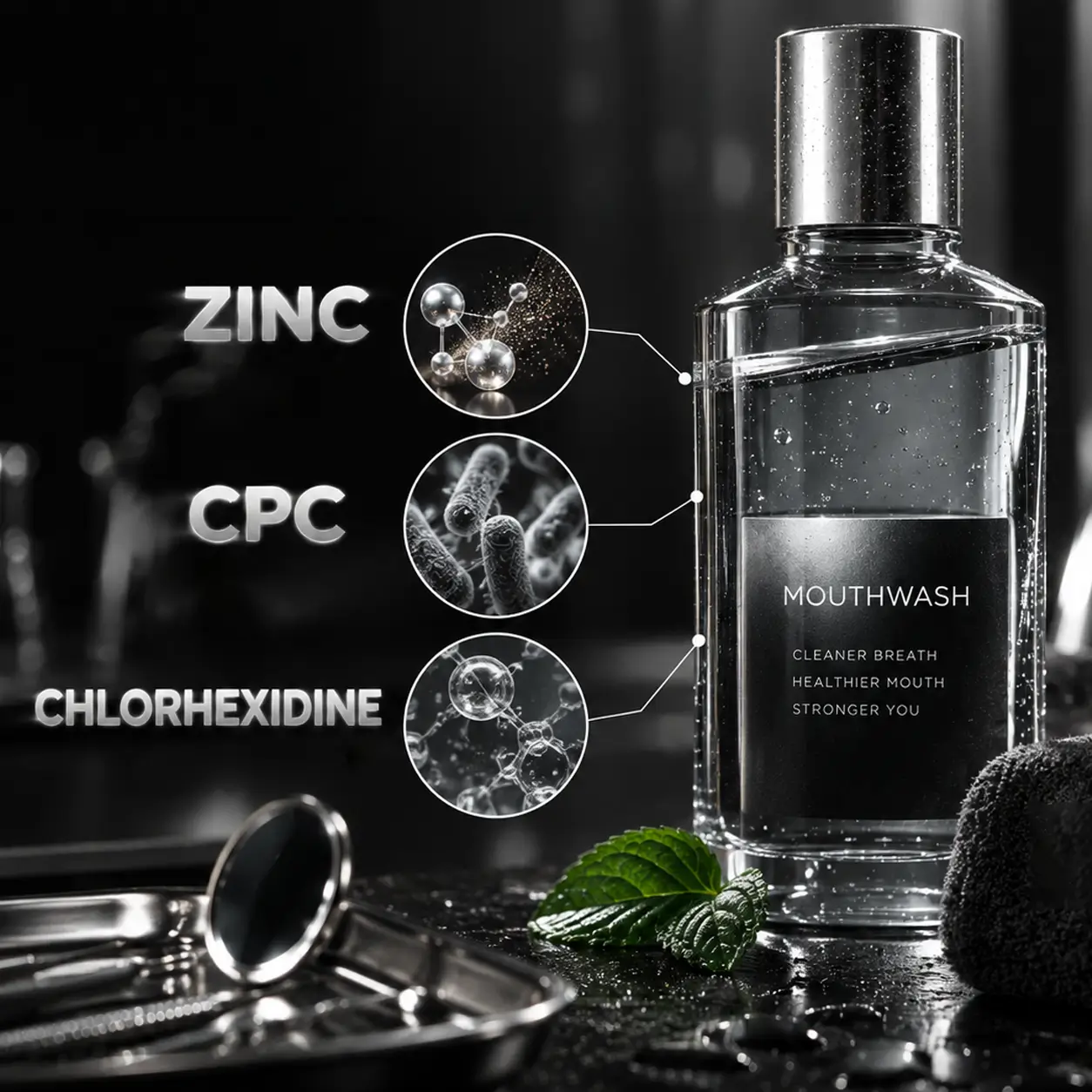
Choose a mouthwash by active ingredient rather than flavour. Zinc salts chemically neutralise sulphur gases. Chlorhexidine or cetylpyridinium chloride reduce the bacteria producing them. Pairing zinc with an antibacterial gives the strongest measured effect. Alcohol-based rinses dry the mouth and often leave breath worse after a few hours.
Evidence separates masking from treatment. A 2015 systematic review by Slot et al in the Journal of Clinical Periodontology found chlorhexidine and zinc rinses gave the most consistent medium-term reduction in oral malodour. Chlorhexidine performs well across a 2 week course but the ingredient is not right for everyday freshening because prolonged use stains teeth and dulls taste as Poppolo Deus et al documented in 2022. Cetylpyridinium chloride is the sensible daily alternative. Probiotic lozenges containing Streptococcus salivarius K12 showed measurable benefit in a placebo controlled trial by He et al in 2020.
What Is the Best Toothpaste for Bad Breath?
Look for zinc compounds, stannous fluoride or a dedicated antibacterial agent on the ingredient panel. Zinc binds sulphur gases directly. Stannous fluoride lowers the bacterial load driving both odour and gum inflammation. Whitening pastes do nothing for breath since surface stain carries no smell of its own.
Toothpaste is a delivery vehicle rather than a cure. Clinical evidence gathered by Khounganian et al in a 2023 narrative review placed mechanical plaque removal ahead of any single formulation. A zinc-containing paste still buys a useful extra margin between brushes. Baking soda pastes raise oral pH modestly. Strong mint flavouring masks odour for 20 to 30 minutes at best. For example, our clinical team advises international patients to pack a soft brush plus an interdental set rather than a specialist paste because cleaning between teeth removes debris no paste ever reaches.
Get a personalised breath assessment from our clinical team on the 24 hour patient coordination line.
Can Bad Breath Come from the Throat or Tonsils?
Yes. Bad breath from the throat usually traces to tonsil stones, post-nasal drip or chronic sinus infection. Tonsil stones are calcified plugs of bacteria and debris caught in tonsil crypts. The smell is unmistakably sulphurous. No amount of tooth brushing reaches the source.
Extra-oral sources make up a minority of cases yet resist every dental measure. Contact our patient coordination team if odour continues after a clean dental check. Research summarised by Wu et al put non-oral causes at roughly 10 to 15% of genuine halitosis. Post-nasal drip deposits protein-rich mucus across the back of the tongue overnight. Chronic tonsillitis creates deep crypts where anaerobes multiply undisturbed. In practice our clinic refers such patients to an ENT colleague once a full dental examination comes back clean. Gargling reaches the tonsil surface only. Removing an established stone needs irrigation or a specialist procedure.
Do Cavities and Gum Disease Cause Bad Breath?
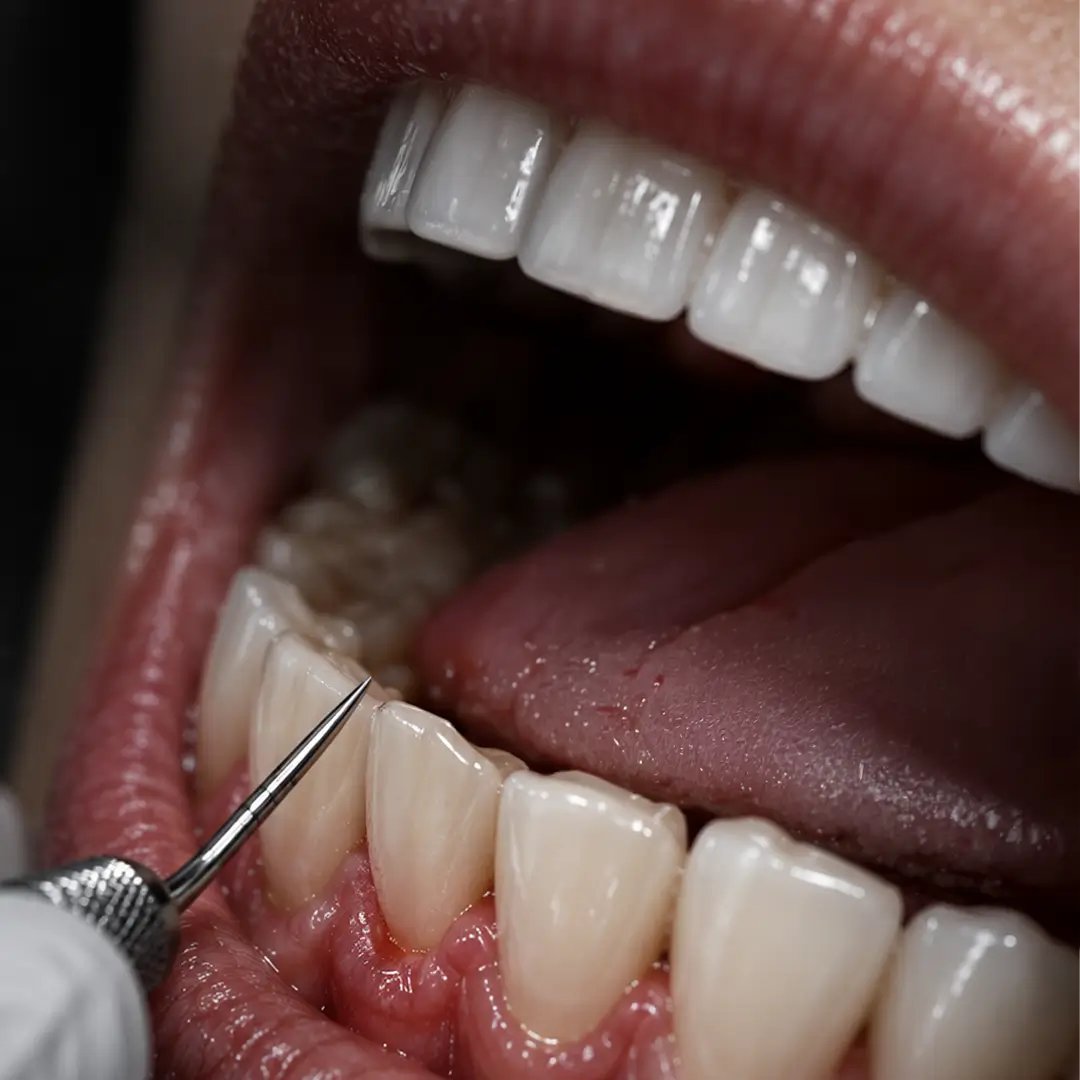
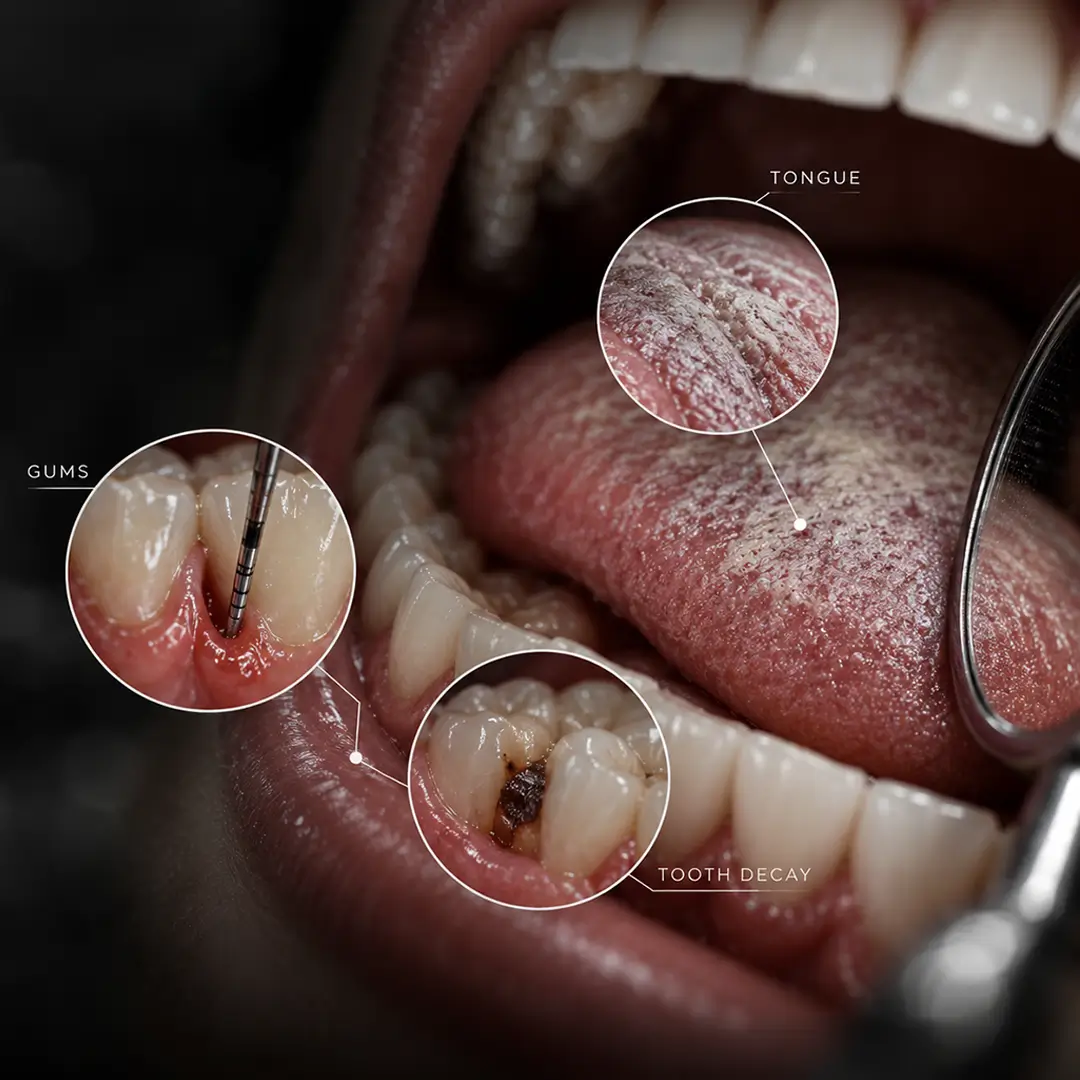
Yes. Untreated cavities trap food in a space no brush reaches so decaying dentine releases a distinctly stale odour. Gum disease is the stronger driver because periodontal pockets host exactly the anaerobic species producing sulphur gases. An abscess adds a sharp putrid smell.
Odour often becomes the first clue to a hidden dental problem. Studies found breath scores improve measurably within 4 weeks of periodontal treatment. A pocket measuring 6 mm shelters a bacterial community no rinse can penetrate. Our periodontal team therefore screens every halitosis patient with full pocket charting before discussing products at all. Where decay has reached the pulp, root canal treatment by endodontic specialists removes the source directly. Consistent gum disease treatment and periodontal care keeps pockets shallow enough for home cleaning to work. An untreated tooth infection never resolves with mouthwash.
How Do You Fix Bad Breath for Good and When Should You See a Doctor?
Fixing bad breath permanently means removing the source rather than covering it. Clean the tongue daily. Clean between every tooth. Treat gum disease or decay. Keep saliva flowing with water plus sugar-free gum. See a doctor when odour persists despite excellent hygiene and a clean dental examination.
Sequence matters more than product choice. Start with professional plaque and tartar removal because no home routine works over a hardened deposit. Add tongue cleaning plus daily interdental brushes. Review any medication causing dryness with the prescribing doctor rather than stopping treatment alone. International Plus carries 5,504 verified reviews at 4.8 out of 5 and has treated more than 200,000 patients from 140+ countries so a combined hygiene and periodontal visit can be arranged inside a single trip. This guide was reviewed by Dr. Eren Gülbahar, an American Dental Association member. Individual results vary.
Book a breath and gum health consultation with the International Plus coordination team.
Frequently Asked Questions
How do I know if I have bad breath?
Self-testing is unreliable because the brain filters out constant smells. Lick the inside of your wrist. Wait 10 seconds then smell the dried saliva. Alternatively scrape the back of the tongue with a clean spoon and check the residue. A trusted person or a dental exam gives the clearest answer.
Why does my breath still smell after brushing and flossing?
Brushing and flossing clean teeth but never the tongue. That coating holds most odour-producing bacteria. Dry mouth, an untreated gum pocket or a hidden cavity can also keep supplying sulphur gases. Add daily tongue cleaning first, then arrange a dental examination if odour continues past two weeks.
Do cavities cause bad breath?
Yes. A cavity creates a sheltered space where food and bacteria collect beyond the reach of a toothbrush, producing a stale or sour odour. Deeper decay reaching the pulp adds a stronger putrid smell. Filling or root canal treatment removes the source and the odour disappears with it.
What is the fastest way to freshen breath?
Drinking water then chewing sugar-free gum for 5 minutes is the fastest short term fix because both restore saliva flow and dilute sulphur gases. Scraping the tongue adds a further quick improvement. These measures buy roughly 30 minutes so treat them as a bridge rather than a solution.
Can bad breath be a sign of something serious?
Occasionally. A sweet acetone smell may accompany uncontrolled diabetes while a fishy or ammonia odour can appear in advanced kidney disease. Such causes are uncommon and always come with other symptoms. Persistent odour after a clean dental examination justifies a medical review rather than self-diagnosis.
Reviewed by Dr. Eren Gülbahar
References
- Wu J, et al. Aust Dent J. 2020. PMID: 31610030
- Kumbargere Nagraj S, et al. Cochrane Database Syst Rev. 2019. PMC6905014
- Slot DE, et al. J Clin Periodontol. 2015. PMID: 25682952
- Khounganian RM, et al. Cureus. 2023. PMC10506127
- Li Z, et al. Clin Oral Investig. 2023. PMID: 37843633
- Poppolo Deus F, et al. Int Dent J. 2022. PMC9275362
- He L, et al. Probiotics Antimicrob Proteins. 2020. PMID: 32227309
Follow us on Social Media
internationalplusofficial
internationalplus
internationalplusdental
This content is written, reviewed, and approved by the International Plus Medical Review Board to ensure clinical accuracy and adherence to strict editorial standards. All medical information is regularly monitored, audited and updated in light of the latest scientific advancements.
However the information provided here is for general informational purposes only and cannot be used for self diagnosis or making individual health interpretations. Results of medical treatments depend on individual anatomy and the unique healing process of each patient. This information should not replace a personal consultation with a qualified healthcare professional. To understand the best options for your specific needs and to receive a personalized treatment plan, we invite you to book a free consultation with the expert medical team at International Plus.

I am a healthcare professional with over 4 years of experience in dentistry, specializing in prosthetic dental treatment and implant-based applications. Since 2024, I have been serving as chief physician, leading clinical management, team coordination, and international patient processes. With my B2-level English proficiency, I am able to communicate effectively with international patients. I am a patient-centered, innovative, and solution-oriented dentist who prioritizes patient satisfaction.