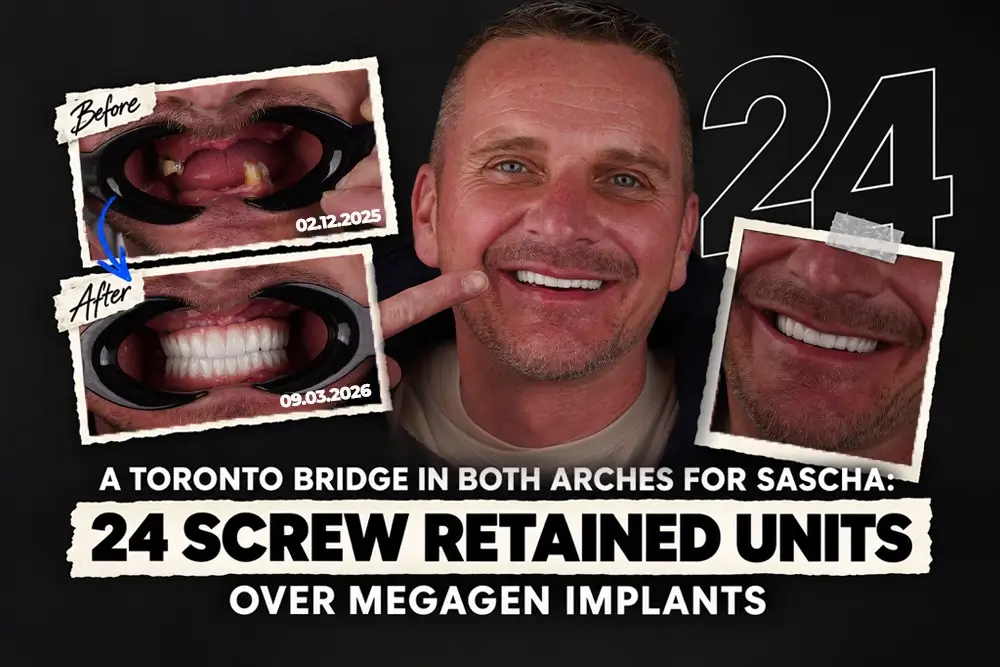
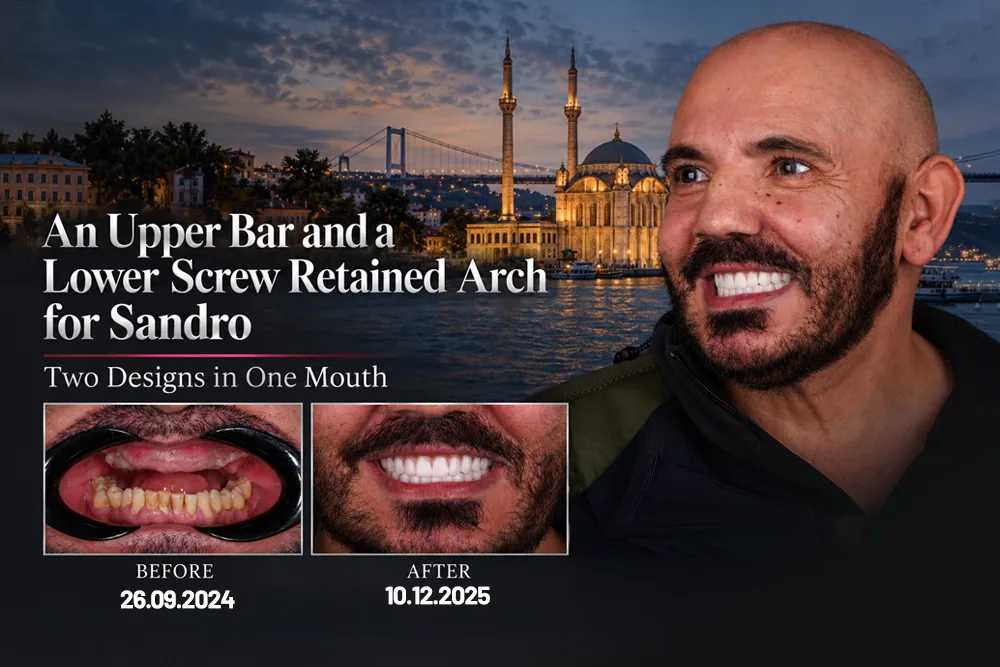
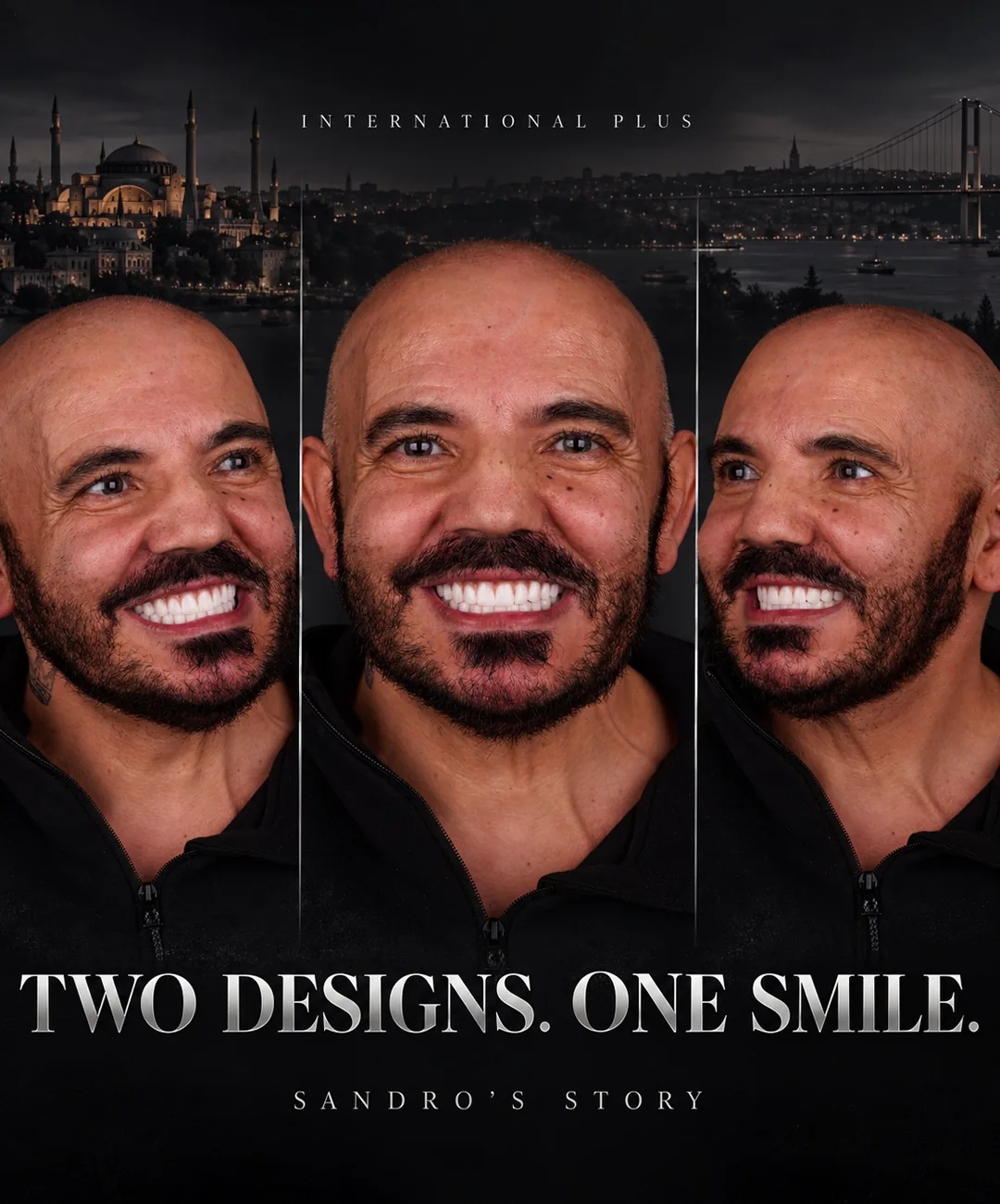
A full arch case usually carries one retention design throughout. Sandro was treated at International Plus as an Italian speaking patient whose record lists something different: an upper bar lower screw retained design, carrying 24 zirconia units between them in shade OM3. One mouth, two prosthetic designs. This case study follows what a record like that contains.
Key Takeaways
- The challenge: A two arch rehabilitation where the upper and lower jaws were not given the same prosthetic design.
- The solution: A bar retained upper arch and a screw retained lower arch under one set of 24 zirconia units.
- The technique: Shade OM3 with the clinic’s Plus 1 smile design style, recorded before production.
- The outcome: 24 units delivered across both jaws with a night guard fitted at the same appointment.
What Bar Retention and Screw Retention Each Mean
Bar retention is a design where a milled framework joins the implants first and the restoration is then carried on that bar. Screw retention fixes each unit directly to its implant through an access channel.
Both avoid cement, which matters because residual cement around an implant is a known problem. A systematic review compared the clinical performance of screw retained against cement retained implant reconstructions (Wittneben JG, et al., 2014) and a meta-analysis examined marginal bone loss across the same comparison (Lemos CA, et al., 2016).
The difference between the two is where the span is joined. A bar joins the implants in metal before the ceramic arrives. For example, our bar supported rehabilitation case records bars in both jaws rather than in one.
Sandro’s Record and the Two Arch Designs
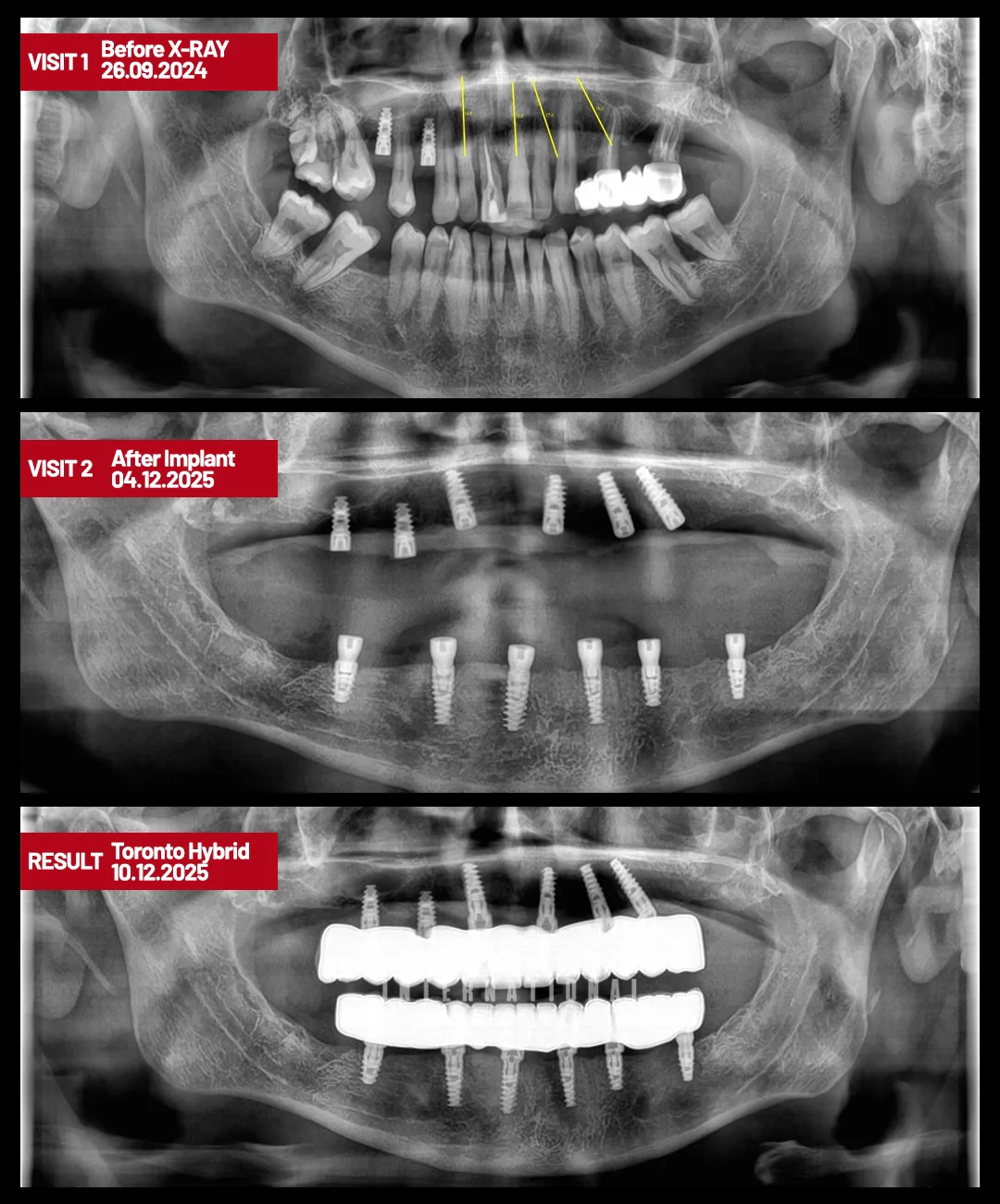
The file lists the upper arch as bar retained and the lower arch as screw retained. A retention design is the method that holds a restoration onto its implants and here two methods appear side by side in one record.
Twenty four zirconia units are listed across the two jaws in shade OM3, designed in the clinic’s Plus 1 smile design style. A night guard is recorded at delivery.
According to systematic reviews of implant supported reconstructions, retention method carries consequences for both complications and maintenance (Wittneben JG, et al., 2014). For example, a file written per arch rather than per patient can carry two answers at once, which is what this record does.
| Record | Detail |
|—|—|
| Zirconia units | 24 across both jaws |
| Upper arch | Bar retained |
| Lower arch | Screw retained |
| Shade | OM3 |
| Smile design style | Plus 1 |
| Appliance | Night guard fitted at delivery |
| Language | Patient treated in Italian |
Why Two Arches Can Take Two Different Designs
The upper and lower jaws are not the same engineering problem. Bone density differs between them, the available height differs and the direction of load differs because the lower jaw moves while the upper does not.
Clinical evidence on how prosthetic design relates to peri-implant bone loss has been reviewed systematically (Lin GH, et al., 2025). Design is therefore assessed against the site rather than applied as a house standard.
Running two designs costs an extra manufacturing stage on the bar side but that stage is accepted on split plans because each arch then keeps the design its own site supports. In practice our clinic writes the retention method for each arch separately in the file. Implant treatment at the clinic sits under dental implant.
How One Set of 24 Units Spans Both Designs
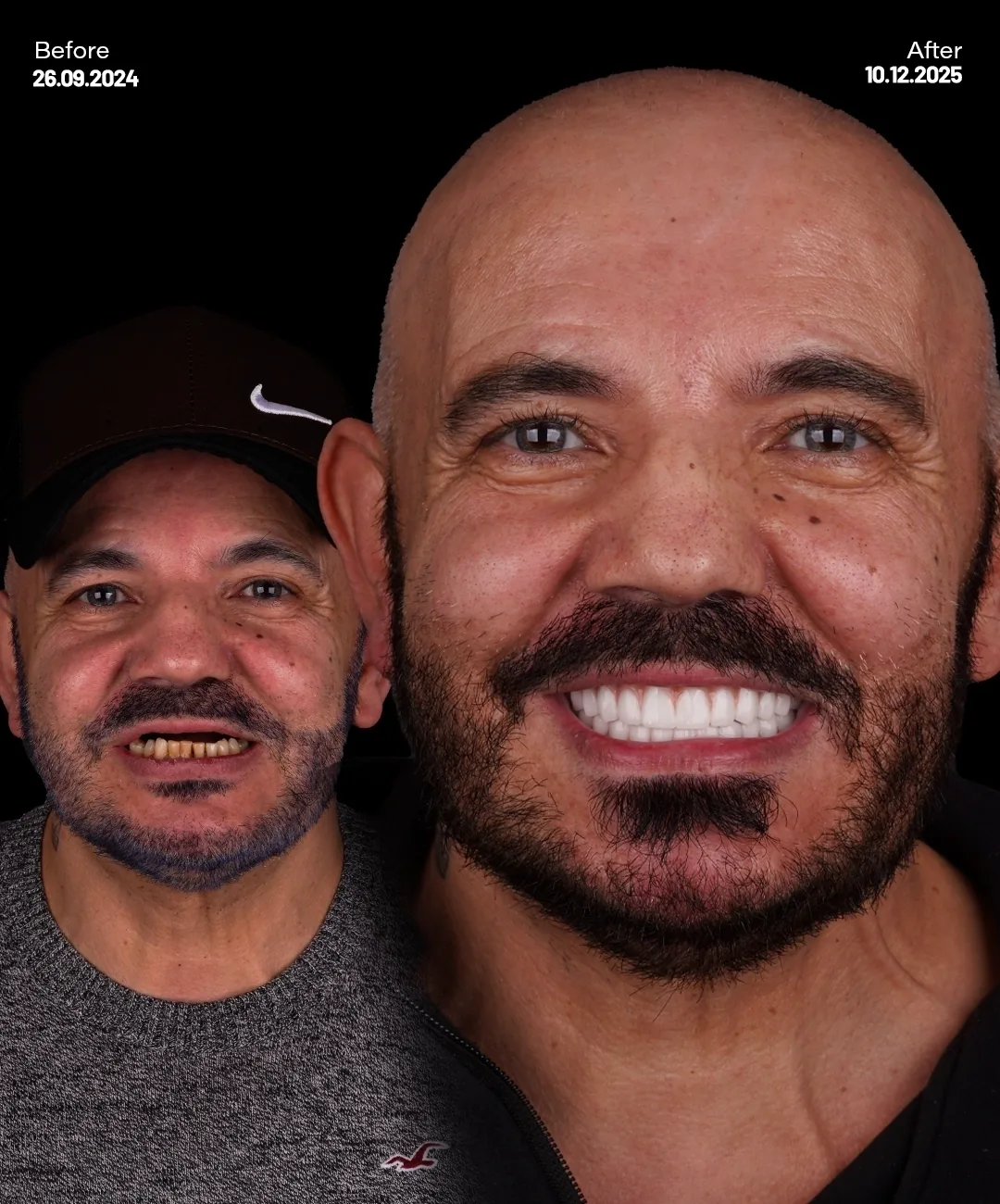
The restorations above are designed as a single set even though what holds them differs. Twenty four units have to meet each other when the patient closes, regardless of whether a bar or a screw sits underneath.
According to reviews of implant supported ceramic restorations, survival and complication rates have been assessed across veneered and monolithic designs (Pjetursson BE, et al., 2021). Framework material has been compared separately for marginal fit and fracture resistance (Atsu S, et al., 2024).
Shade OM3 and the Plus 1 style were recorded before production, a stage offered as digital smile design. Units were milled in the clinic’s own digital laboratory, which keeps the bar stage and the ceramic stage under one roof. Restorations of this type sit under dental crowns and our screw retained rehabilitation case documents the screw design used alone.
What the Record Shows at Delivery
Sandro’s file documents 24 zirconia units delivered, a bar retained upper arch, a screw retained lower arch and a night guard fitted at the same appointment. A guard is recorded for both arches rather than for one.
Recording retention per arch is what makes the file useful later. A clinician opening it can see that releasing a unit in the lower jaw is a different operation from working on the upper. Our clinic issues that detail in writing alongside the materials.
This is one patient’s recorded outcome and individual results may vary. International Plus has treated more than 200,000 patients from 140+ countries since 2014 and holds a rating of 4.8 out of 5 across 5,504 reviews. No clinic can promise an identical design because the jaw that suits a bar in one patient may not in another.
Book a consultation with International Plus if you want to know which retention design your own arches would take.
Frequently Asked Questions
What is the difference between bar retained and screw retained?
Bar retention joins the implants with a milled framework first and the restoration is carried on that bar. Screw retention fixes each unit directly to its implant through an access channel. Both avoid cement and the difference lies in where the span is joined together.
Can one patient really have two different designs?
Yes. The upper and lower jaws differ in bone density, available height and the direction of load since the lower jaw moves while the upper does not. Retention is therefore assessed per arch. This record lists a bar above and screws below in the same mouth.
Why is cement avoided in implant restorations?
Residual cement left around an implant is a recognised problem and both bar and screw designs avoid it by using mechanical fixation instead. Systematic reviews have compared screw retained against cement retained reconstructions for clinical performance and for marginal bone loss.
Does a bar design take longer to make?
A bar adds a manufacturing stage because the framework is produced before the ceramic above it. Where the laboratory is on the same site as the clinic, that stage happens in house rather than across a shipping cycle. This record lists a bar above and screw retention below in one file.
Why was a night guard fitted at the end?
A night guard is an appliance worn during sleep that takes night time loading. Twenty four units across two arches represent a large volume of restorative work. The record lists the guard fitted at the same appointment as delivery rather than at a later visit.
Reviewed by Dr. Mehmet Yavuz
References
- Wittneben JG, et al. Int J Oral Maxillofac Implants. 2014. PMID: 24660192
- Lemos CA, et al. J Prosthet Dent. 2016. PMID: 26589441
- Lin GH, et al. J Periodontol. 2025. PMC12273757
- Pjetursson BE, et al. Clin Oral Implants Res. 2021. PMC9293296
- Atsu S, et al. J Prosthet Dent. 2024. PMID: 37620182
Follow us on Social Media
internationalplusofficial
internationalplus
internationalplusdental
This content is written, reviewed, and approved by the International Plus Medical Review Board to ensure clinical accuracy and adherence to strict editorial standards. All medical information is regularly monitored, audited and updated in light of the latest scientific advancements.
However the information provided here is for general informational purposes only and cannot be used for self diagnosis or making individual health interpretations. Results of medical treatments depend on individual anatomy and the unique healing process of each patient. This information should not replace a personal consultation with a qualified healthcare professional. To understand the best options for your specific needs and to receive a personalized treatment plan, we invite you to book a free consultation with the expert medical team at International Plus.
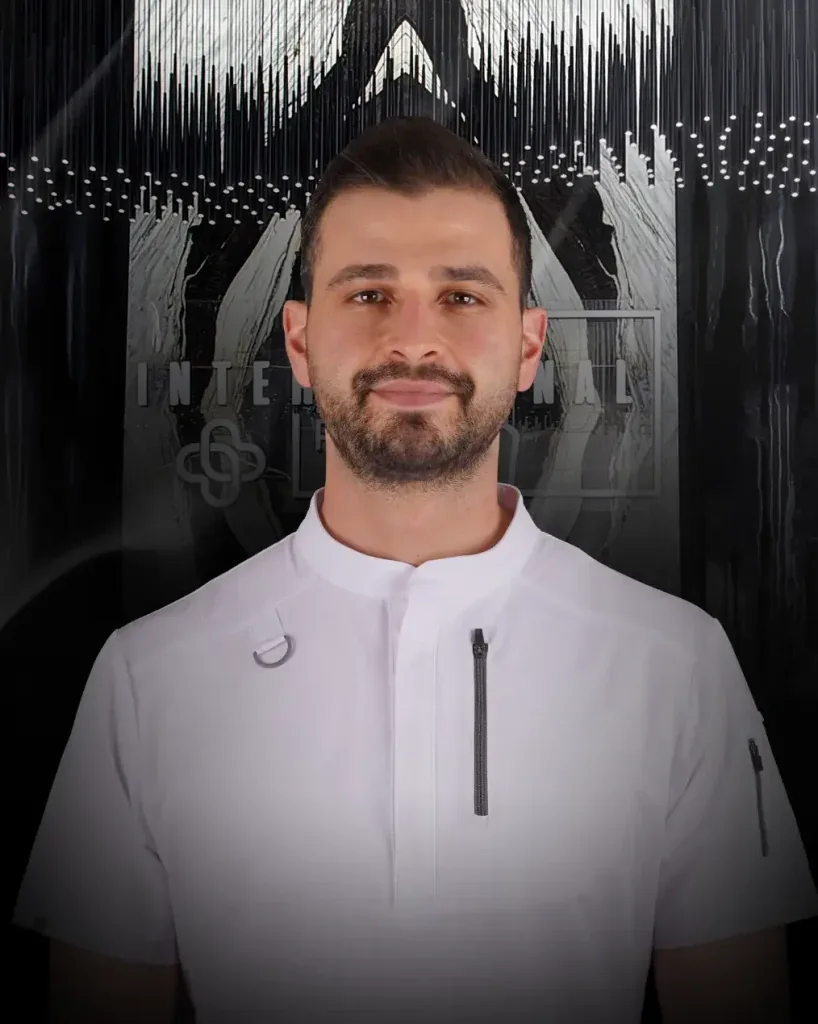
Dr. Mehmet Yavuz specializes in premium ceramic restorations, building beautiful, natural looking smiles through skilled Emax crown work and laminate veneer artistry for patients abroad. His mastery of both high translucency zirconium systems and delicate Emax materials lets him choose the ideal restoration for each patient’s unique needs and aesthetic wishes. Travelers seek him out specifically for his attention to detail in color matching, shape design and smile aesthetics that enhance rather than overpower natural facial features. His thorough case analysis and digital smile planning secure predictable results, giving patients confidence in their outcomes before any procedure begins. Mindful of the worries visitors carry about complex aesthetic work overseas, he provides full consultations with realistic expectations and detailed timelines. Patient reviews steadily highlight his artistic skill, professional approach and gift for creating smile transformations that look truly natural. Fluent in English and experienced in coordinating multi visit cosmetic cases, he delivers exceptional results with warm, patient centered care.