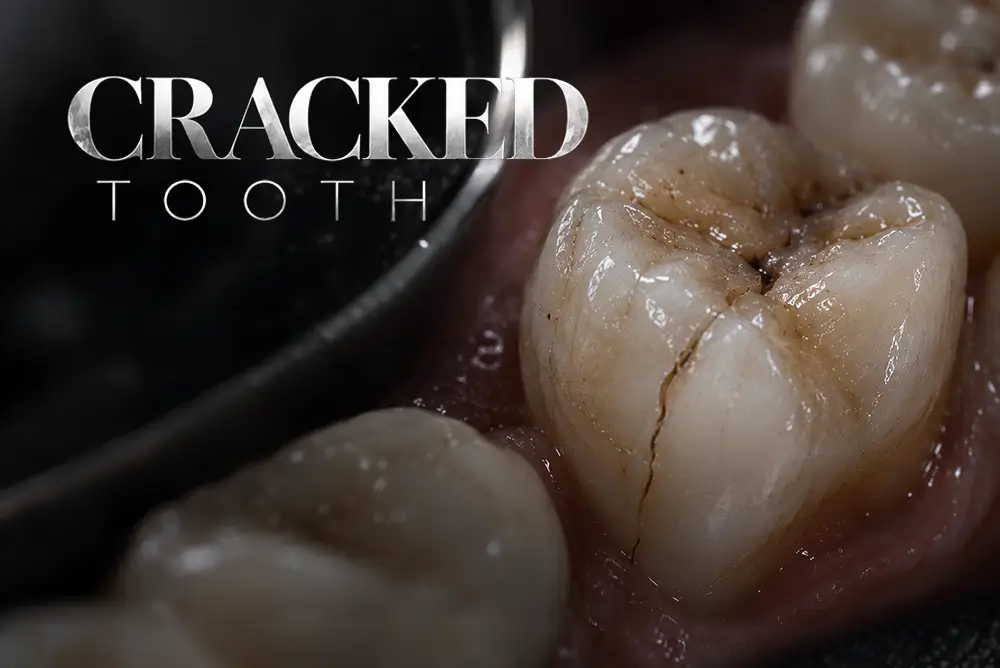
A cracked tooth is a fracture line running through tooth structure while the tooth still looks intact. Nothing has broken off, which is exactly why the problem hides. This guide explains how a crack differs from a chip. It then covers why diagnosis is difficult and which crack types can realistically be restored. Authorized by the Turkish Ministry of Health and rated 4.8/5 across 5,504+ verified reviews, International Plus restores fractured teeth for patients from over 140 countries.
Key Takeaways
- A crack is a fracture line with no missing fragment. A chip is a piece that has broken away and the two need different treatment.
- Sharp pain on releasing a bite is the signature symptom and many cracks stay invisible on a standard dental X-ray.
- Crack type decides prognosis from harmless craze lines to a vertical root fracture that usually cannot be saved.
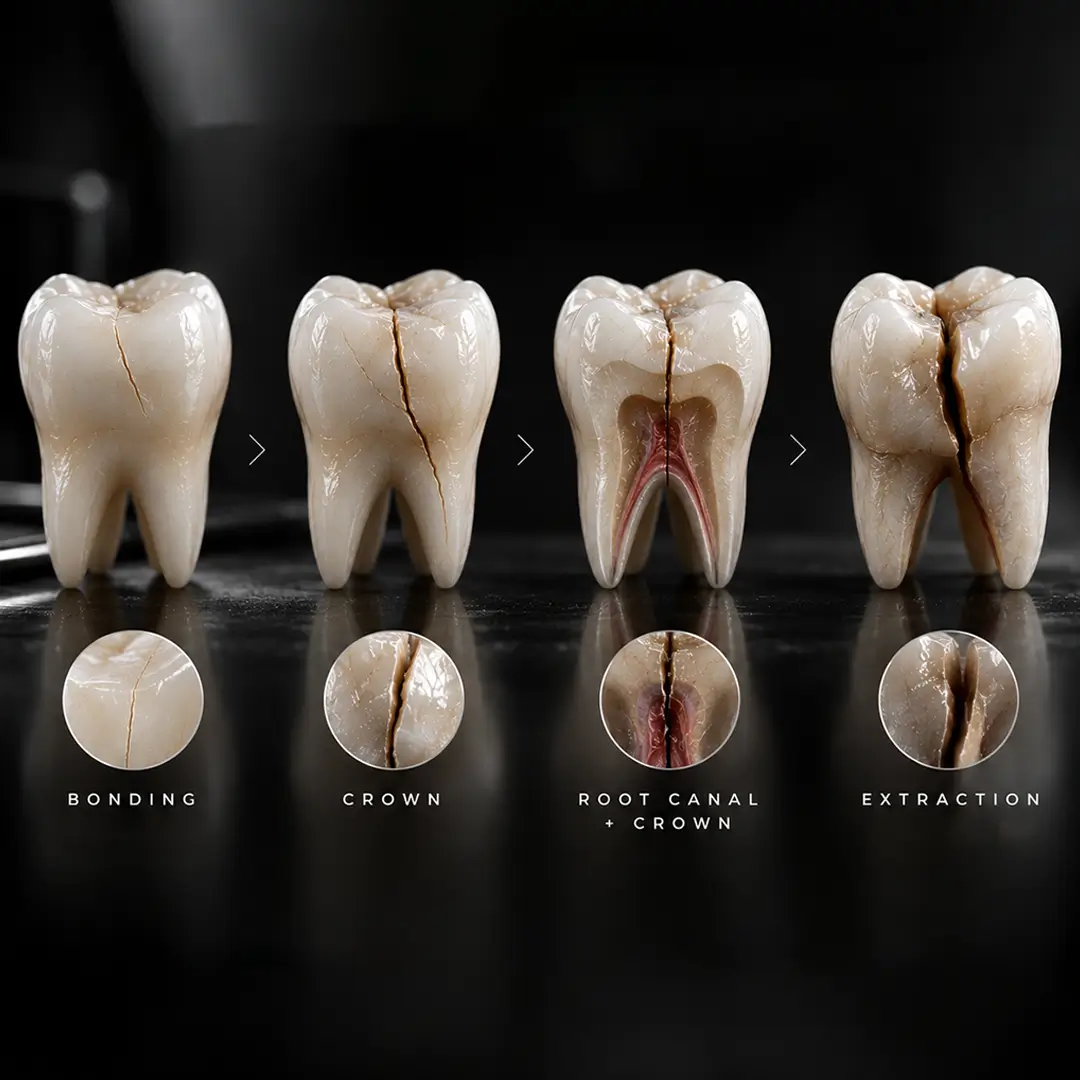
- Treatment scales with depth: bonding, a crown, root canal treatment plus a crown or extraction when the tooth splits.
- No home remedy repairs a crack. Delay lets a restorable crack progress into an unrestorable one.
What Is a Cracked Tooth and How It Differs From a Chipped Tooth
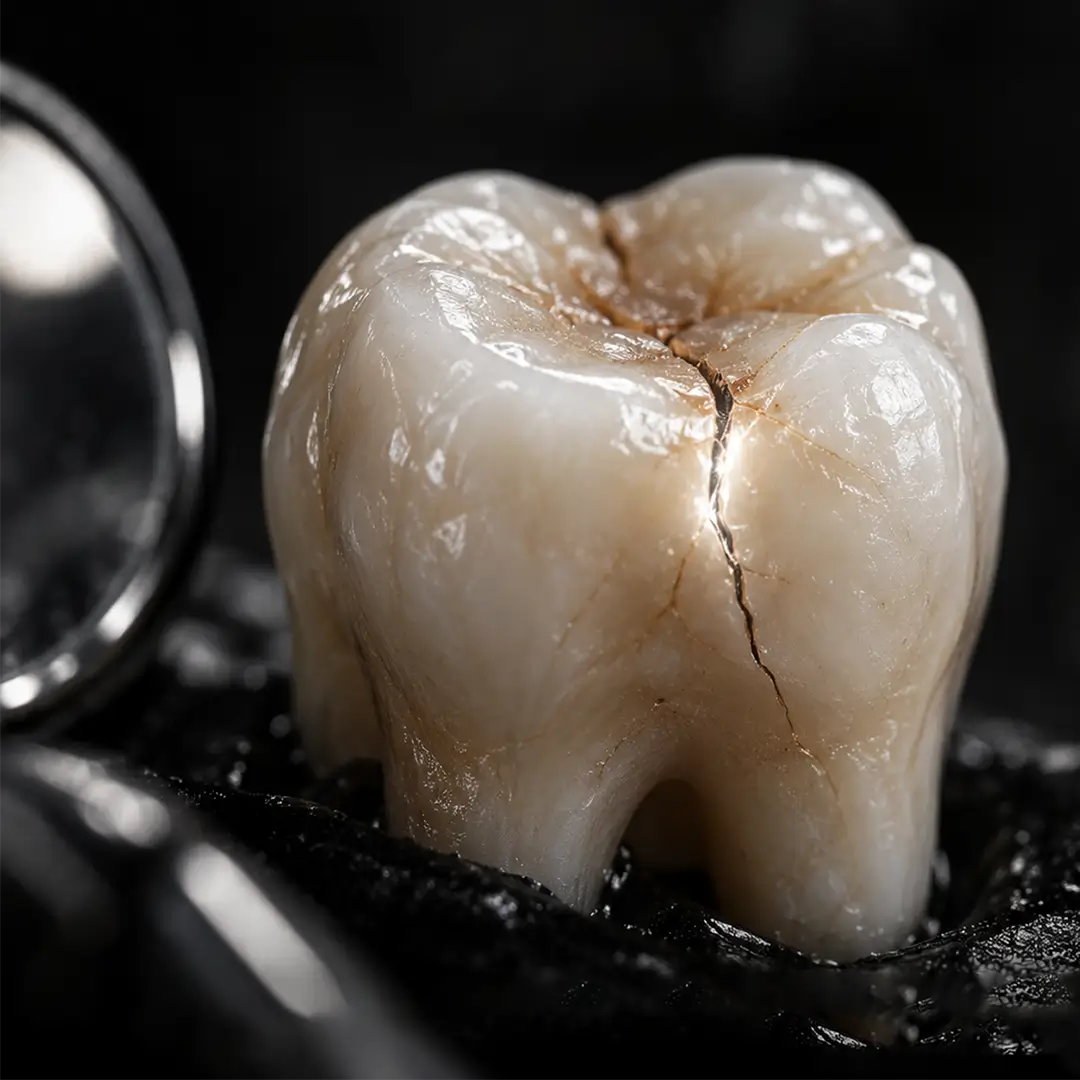
A cracked tooth has a fracture line through the enamel or dentine with no fragment missing. A chipped tooth has lost a visible piece, leaving a rough edge or a notch. The distinction is practical: a chip is visible and measurable while a crack must be hunted for.
That difference drives everything that follows. A chip is graded by how much tooth is gone so the repair rebuilds volume with bonding or a crown as our guide to a chipped tooth explains. A crack is graded by how deep the line travels and whether it crosses the pulp or the root so the treatment aims to hold the segments together and protect the nerve. Cracked tooth syndrome is the name given to the symptom cluster that a crack produces before it becomes visible and it affects a meaningful share of adults each year (Li F, et al., 2021). Our Diagnostic Council photographs and transilluminates every suspected crack before planning because a crack that is missed today becomes a split tooth later.
Types of Cracked Teeth and What Each Type Means
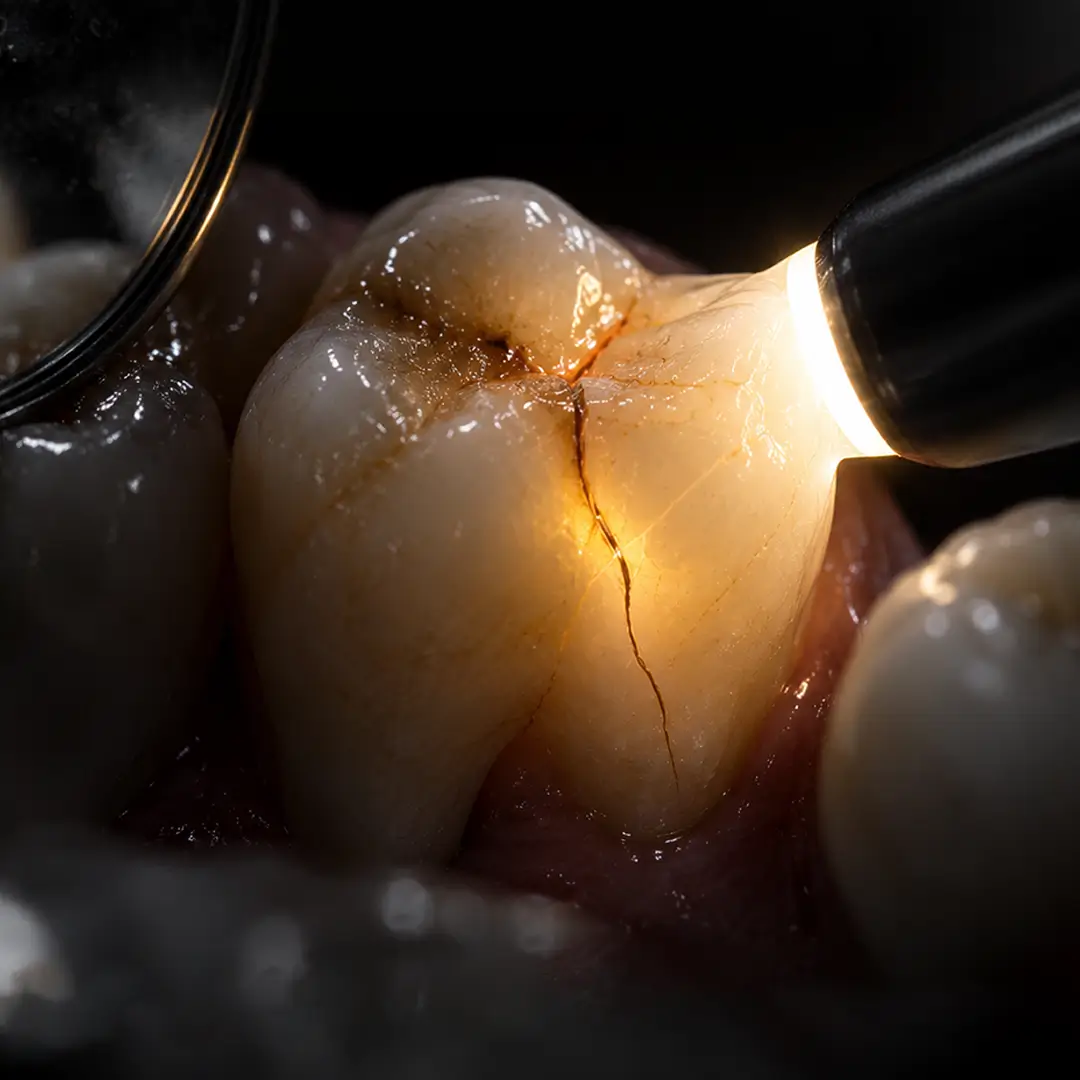
Dentists classify cracked teeth into five recognised patterns. Craze lines are superficial enamel cracks with no symptoms. A fractured cusp breaks around a filling. A vertical crack runs from the biting surface toward the root. Segments have fully separated in a split tooth. A vertical root fracture starts in the root and travels upward.
Classification is not academic because each pattern carries its own prognosis and its own treatment ceiling (Patel S, et al., 2025). Lower molars carry the highest incidence and previously root treated teeth sit at higher risk because they have less remaining structure to resist bite forces.
| Crack type | What it looks like | Typical outlook |
| Craze line | Fine vertical line in enamel only | Harmless, monitored rather than treated |
| Fractured cusp | A cusp weakened around a large filling | Good, usually restored with an onlay or crown |
| Cracked tooth | Line running from the biting surface toward the root | Depends on depth, crown with or without root canal |
| Split tooth | Tooth separated into distinct segments | Poor, part or all of the tooth is usually lost |
| Vertical root fracture | Fracture starting in the root, few early symptoms | Poor, extraction is the common outcome |
The table shows the honest gradient: the deeper the line travels toward the root, the narrower the treatment options become.
Cracked Tooth Symptoms: What a Crack Actually Feels Like
The signature symptom is sharp pain on releasing a bite rather than on pressing down. Other cracked tooth symptoms include sensitivity to cold or sweet food, intermittent pain, discomfort that seems to move between teeth or a tooth that feels perfectly normal between episodes.
Rebound pain happens because biting closes the fracture line while releasing lets the segments spring apart and pull on the pulp nerve fibres. That pattern is the most reliable clinical clue there is (Gill T, et al., 2021). Many patients also report a tooth cracked in half with no pain, which happens when the fracture stays within enamel or when the nerve has already died. Absence of pain never means absence of a problem. Persistent cold sensitivity in one tooth deserves the same attention described in our guide to sensitive teeth since a crack and exposed dentine feel similar to the patient.
Book Your Free Consultation →
Why a Cracked Tooth Is So Hard to Diagnose
Cracks are difficult to diagnose because a standard dental X-ray usually cannot show them. A fracture line running in the same plane as the beam produces no shadow. Symptoms also migrate so patients frequently point to the wrong tooth or even the wrong jaw.
Diagnosis therefore relies on a sequence of physical tests rather than a single image. A bite stick test loads one cusp at a time to reproduce the release pain and localise the tooth. Transillumination shines light through the crown so a crack interrupts the glow. Methylene blue dye stains the line. Cone beam CT adds value in selected cases although even three dimensional imaging misses fine fractures and is not a substitute for clinical testing (Patel S, et al., 2022). Removing an existing filling to inspect the floor of the cavity is often the step that finally confirms the diagnosis. Pain that spreads into the joint or muscles is assessed separately as our page on jaw pain describes.
What Causes a Cracked Tooth
Cracks form when repeated force exceeds what the remaining tooth structure can absorb. The common drivers are night time grinding, biting something hard such as an olive stone or ice, a large old filling that leaves thin walls, previous root canal treatment or normal age related fatigue of enamel.
Force and structure interact. A tooth with a filling covering more than half the biting surface has cusps that flex under every chew and thousands of small flexions eventually propagate a line. Bruxism multiplies the load, which is why cracks cluster in patients who also report morning jaw tightness. Our guide to teeth grinding covers the protective night guard protocol we use for those patients. Temperature swings add stress too since alternating hot drinks and cold water make enamel expand and contract against a stiffer restoration. In our practice, the highest risk profile is a lower molar with a wide amalgam filling in a patient over 40 who grinds.
Cracked Tooth Treatment: Bonding, Crown, Root Canal or Extraction
Cracked tooth treatment matches the depth of the fracture. Shallow cracks are sealed with bonding or an onlay. Fractures reaching dentine are protected with a full coverage crown that binds the cusps. When the line enters the pulp, root canal treatment comes before the crown. Extraction becomes the option once the tooth has split.
Full coverage is the mechanical principle behind most successful outcomes because a crown converts flexing cusps into a single reinforced unit. Cracked teeth treated with root canal therapy and then protected with a cuspal coverage restoration show high survival at medium term follow up (Lee J, et al., 2021; Kakka A, et al., 2022). A crown works well for a crack confined to the crown of the tooth but it is not suitable for a vertical root fracture because the fracture line already extends below the bone. When a tooth cannot be held together, our surgical team plans an atraumatic removal and reviews extraction aftercare so the site heals well for a future implant. Deep cracks that have already infected the pulp are managed by root canal treatment by endodontic specialists before any restoration is designed.
Get a personalized cracked tooth assessment →
Can a Cracked Tooth Be Saved? An Honest Answer
Many cracked teeth can be saved yet not all of them. A craze line needs nothing. A fractured cusp or a crack limited to the crown has a good outlook once fully covered. A split tooth or a vertical root fracture usually cannot be saved and no clinician can guarantee an outcome before the crack is fully assessed.
Prognosis depends on three measurable factors: how deep the line runs whether it crosses the pulp floor and whether periodontal probing shows a narrow isolated defect tracking down the fracture. A deep probing defect beside an otherwise healthy tooth is a classic vertical root fracture sign and is evaluated together with gum disease treatment and periodontal care. Studies following cracked teeth report that outcome correlates with crack extent rather than with the material chosen for the restoration (Wu S, et al., 2019). With 200,000+ patients treated from 140+ countries, our approach is to state the prognosis category at the diagnostic visit rather than after treatment has started. An untreated crack that reaches the pulp can also progress to a tooth infection.
How to Fix a Cracked Tooth Naturally and Why That Does Not Work
There is no natural or home method that repairs a cracked tooth. Enamel contains no living cells and cannot regenerate across a fracture line. Oil pulling, clove oil, temporary filling kits or dental wax reduce discomfort for a few days at best. Every lasting repair is mechanical.
Understanding the biology explains the limit. Bone heals because osteocytes rebuild the matrix while mature enamel is acellular so a crack in enamel behaves like a crack in glass and widens under load (Li F, et al., 2021). Delay carries a real cost: a crack restorable with a crown this month can require root canal treatment in three months and extraction within a year. Prevention is more effective than any remedy. Wear a night guard if you grind, avoid chewing ice or hard sweets, replace large failing fillings before the cusps thin, then keep six monthly checkups so a craze line is spotted before it deepens.
Schedule a cracked tooth examination at International Plus →
Frequently Asked Questions
What are the symptoms of a cracked tooth?
Sharp pain when you release a bite is the classic sign along with sensitivity to cold or sweet food and pain that comes and goes. The tooth often feels normal between episodes and patients frequently cannot say which tooth is responsible without a bite stick test.
Can a cracked tooth be fixed?
Often yes. Craze lines need no treatment, a fractured cusp is restored with an onlay or crown and a crack reaching dentine is protected by a full coverage crown. A split tooth or vertical root fracture usually cannot be saved so extraction becomes the realistic option.
Does a cracked tooth need to be pulled?
Not usually. Extraction is reserved for a tooth that has split into separate segments or has a vertical root fracture extending below the bone. Most other cracks are held together with a crown, sometimes after root canal treatment so the tooth continues to function normally.
How can I tell a cracked tooth from a chipped tooth?
A chipped tooth is missing a visible fragment and leaves a rough edge you can feel with your tongue. A cracked tooth looks intact but hurts on biting. If nothing has broken away and pain appears on release, a crack is the more likely explanation.
Can a cracked tooth heal on its own?
No. Enamel has no living cells and cannot regenerate across a fracture so a crack never closes by itself. Under normal chewing the line tends to lengthen instead. Treatment that covers the cusps stops the movement, which is why early assessment matters.
Why does my cracked tooth hurt only sometimes?
Pain appears when the fracture segments move apart and irritate the nerve, which happens with certain foods or bite angles rather than constantly. Between those moments the segments sit together and the tooth feels fine. Intermittent pain is typical of cracked tooth syndrome rather than reassuring.
Reviewed by Dr. Eren Gülbahar
References
- Li F, et al. Pain Res Manag. 2021. PMC8694987
- Kakka A, et al. Clin Exp Dent Res. 2022. PMC9562569
- Patel S, et al. Int Endod J. 2025. PMC11812625
- Gill T, et al. Eur J Prosthodont Restor Dent. 2021. PMID: 33770422
- Lee J, et al. Int Endod J. 2021. PMID: 34245604
- Wu S, et al. J Endod. 2019. PMID: 30905570
- Patel S, et al. Int Endod J. 2022. PMC9324143
Follow us on Social Media
internationalplusofficial
internationalplus
internationalplusdental
This content is written, reviewed, and approved by the International Plus Medical Review Board to ensure clinical accuracy and adherence to strict editorial standards. All medical information is regularly monitored, audited and updated in light of the latest scientific advancements.
However the information provided here is for general informational purposes only and cannot be used for self diagnosis or making individual health interpretations. Results of medical treatments depend on individual anatomy and the unique healing process of each patient. This information should not replace a personal consultation with a qualified healthcare professional. To understand the best options for your specific needs and to receive a personalized treatment plan, we invite you to book a free consultation with the expert medical team at International Plus.

I am a healthcare professional with over 4 years of experience in dentistry, specializing in prosthetic dental treatment and implant-based applications. Since 2024, I have been serving as chief physician, leading clinical management, team coordination, and international patient processes. With my B2-level English proficiency, I am able to communicate effectively with international patients. I am a patient-centered, innovative, and solution-oriented dentist who prioritizes patient satisfaction.