Gum disease starts quietly. A pink tinge in the sink when you brush is often the only early clue. By the time teeth feel loose the bone holding them has already gone. That single fact splits the condition in two. Gingivitis reverses. Periodontitis does not. This International Plus guide explains how gum disease begins and how to read the warning signs early. The guide sets out honestly what home care can fix and where home care stops. You will also find what a dental team does that no rinse replaces and why researchers keep linking inflamed gums to the rest of the body.
Key Takeaways
- Gingivitis is reversible with professional cleaning plus consistent home care. Periodontitis is not because destroyed bone does not grow back.
- Bleeding on brushing or flossing is the earliest reliable sign. Recession and loose teeth arrive much later.
- No mouthwash or home remedy removes hardened tartar below the gum line so self-treatment alone cannot cure established disease.
- Severe periodontitis affects close to 19% of adults worldwide and is linked to cardiovascular disease though association is not proof of cause.
- Treatment runs in four steps: scaling and root planing first, then surgery only where deep pockets persist.
What Is Gum Disease?
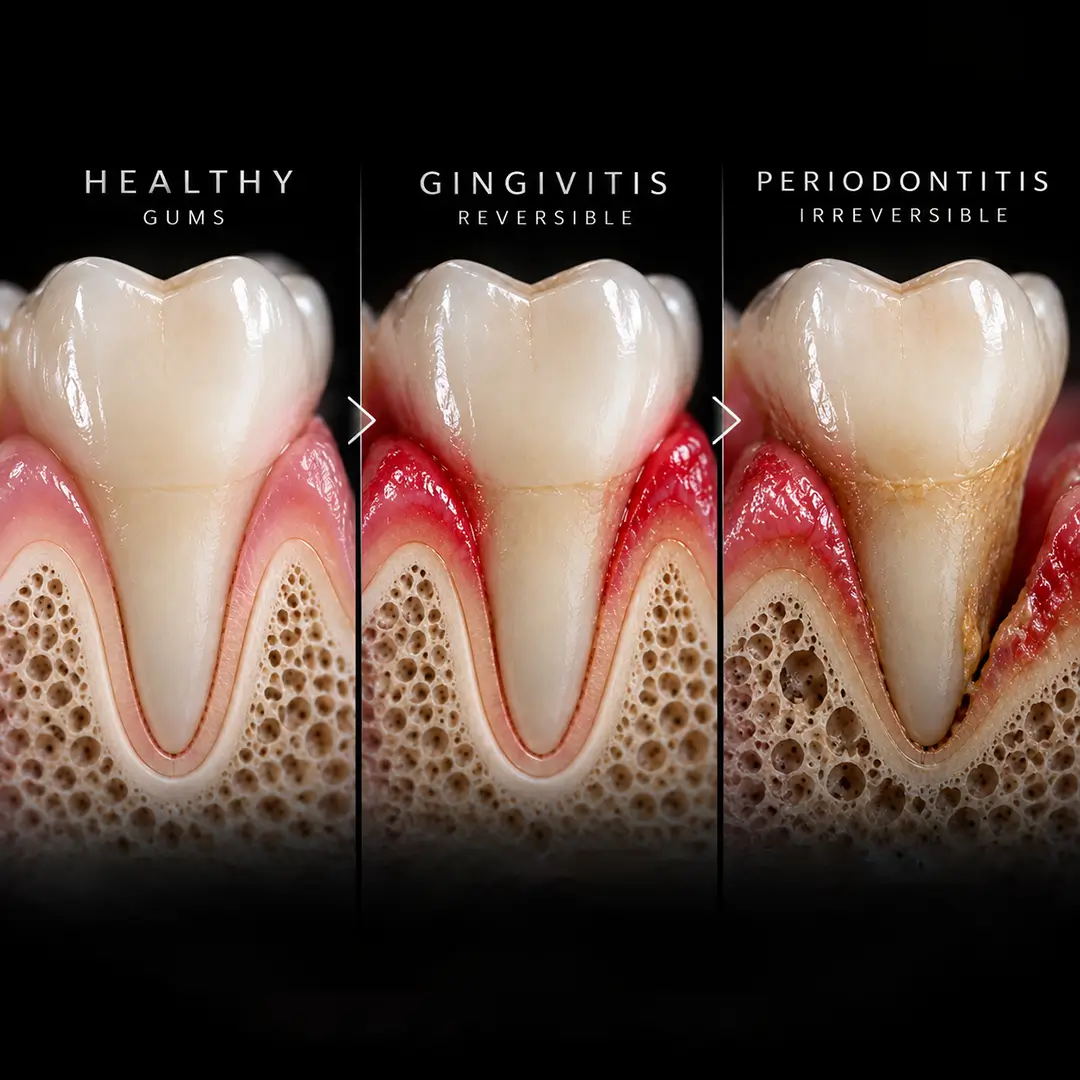
Gum disease is a bacterial inflammation of the tissues holding teeth in place. The early form, gingivitis, is a reversible irritation of the gum margin caused by plaque. Untreated gingivitis progresses to periodontitis, where the immune response destroys the bone anchoring each tooth.
According to the 2017 World Workshop consensus by Papapanou et al in the Journal of Periodontology, periodontitis is defined by attachment loss rather than by soreness. A comfortable mouth can still be losing bone quietly. Research published in 2025 by Hashim et al ranked severe periodontitis among the most widespread chronic diseases on earth, affecting close to 19% of adults. In practice our periodontal team charts six points around every tooth before any cosmetic plan starts. The International Plus Diagnostic Council will not approve crowns over an unstable foundation.
What Causes Gum Disease and Who Is Most at Risk?
Dental plaque is the direct cause of gum disease. The biofilm mineralises into tartar within roughly 24 to 72 hours. Risk climbs steeply for smokers. Poorly controlled diabetes raises risk further. Genetics and several common medications add to the load by weakening the immune barrier between plaque and bone.
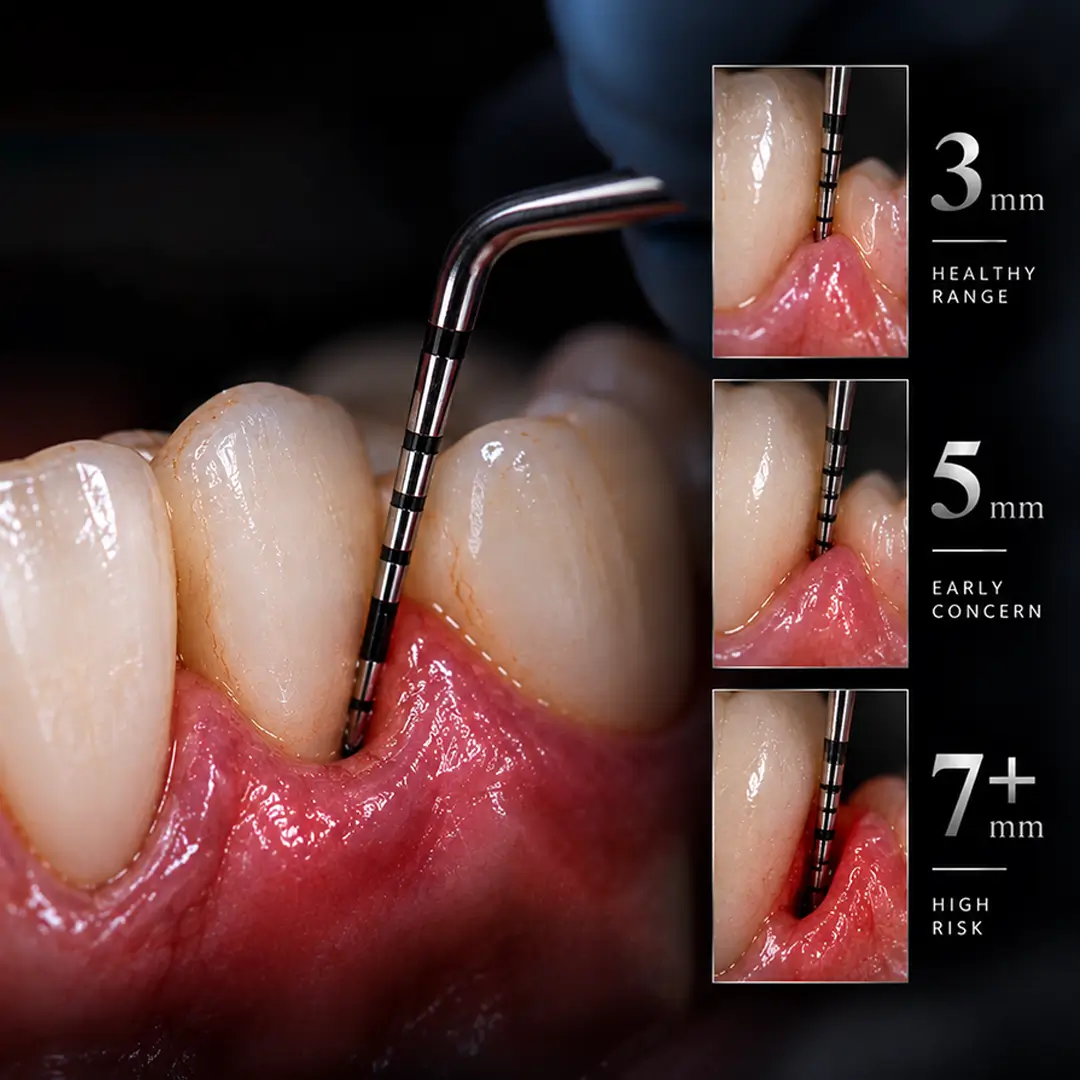
Susceptibility varies far more than plaque levels do. Research by Zhang et al in 2024 traced how the inflammatory cascade rather than bacteria alone drives bone destruction. Two patients carrying identical deposits can lose very different amounts of support. Smoking roughly doubles periodontitis risk while masking bleeding by constricting gum vessels. For example, our clinic regularly sees smokers whose gums look deceptively pale while pockets measure 6 mm. Diabetes works in both directions since periodontal inflammation worsens glycaemic control. Pregnancy hormones shift the balance too. So does long term stress.
What Are the Signs of Gum Disease and What Does It Look Like?
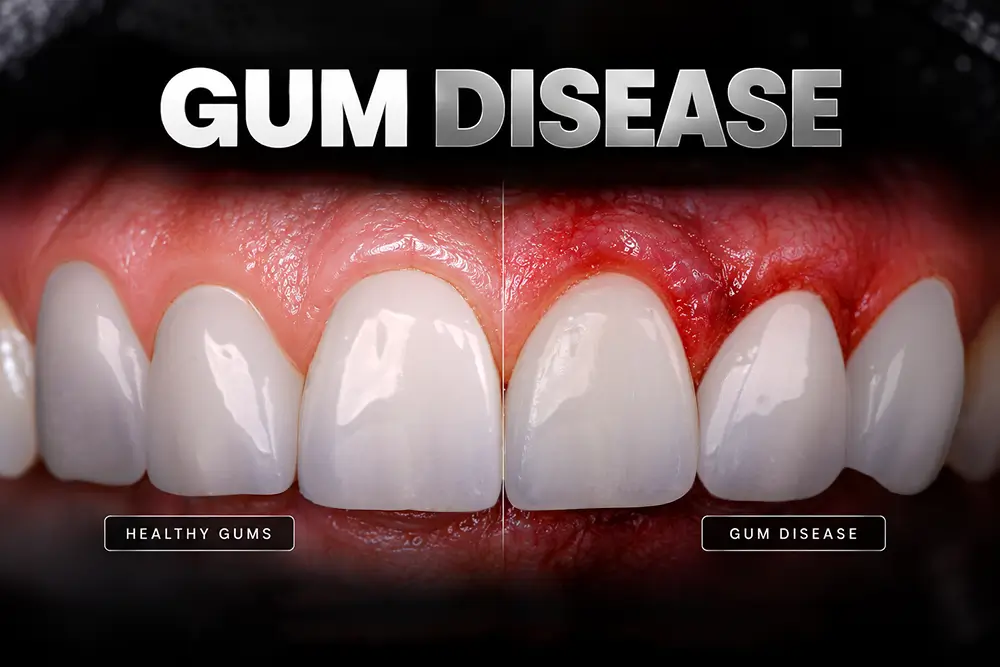
The most reliable early sign of gum disease is bleeding when you brush or floss. Healthy gums do not bleed. Look also for a gum margin appearing red or puffy rather than firm and pale pink. Tenderness plus a metallic taste often follows. Pain arrives much later.
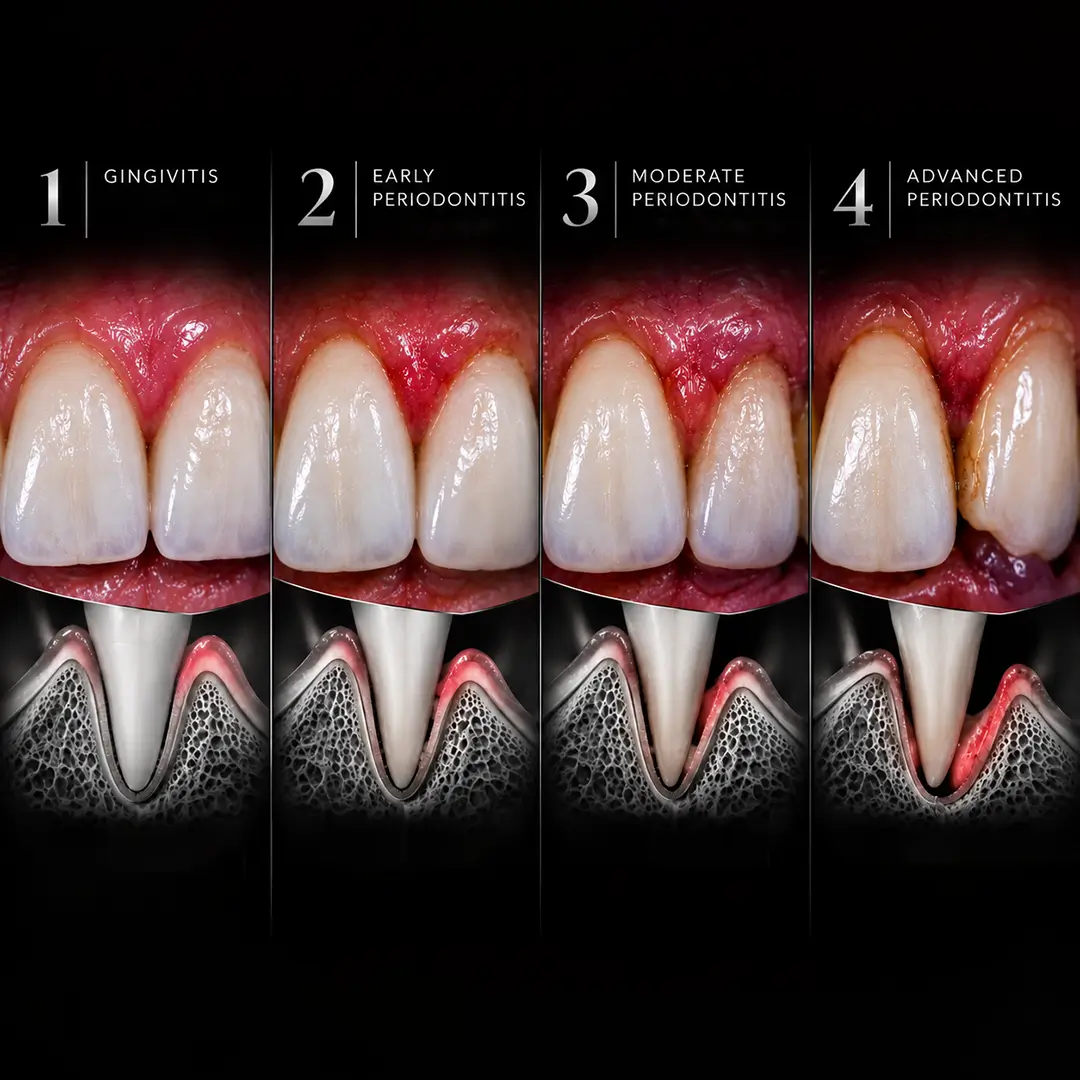
Visual change follows a predictable order. First the gum line shows a glossy swollen band while tissue further away still looks normal. Next the band darkens as the margin pulls back to expose root surface. Teeth begin to look longer. Advanced disease adds spontaneous bleeding with pus at the margin and drifting teeth. Persistent morning breath surviving a full brush is another marker because anaerobic bacteria release sulphur compounds. Patients in our clinic often describe gums as shrinking so separating true gum recession from active infection is the first job of a periodontal exam.
If your gums bleed most days, schedule a periodontal assessment rather than switching toothpaste and waiting.
What Are the Stages of Gum Disease from Gingivitis to Periodontitis?
Four recognised stages describe how gum disease advances. Stage 1 gingivitis affects the gum only. Stage 2 early periodontitis brings the first millimetres of bone loss. Stage 3 moderate periodontitis deepens pockets and loosens teeth slightly. Stage 4 advanced periodontitis destroys enough support for teeth to become mobile or unsalvageable.
| Stage | What is happening | Reversible? |
|—|—|—|
| 1. Gingivitis | Inflamed gum margin with bleeding, no bone loss | Yes, fully |
| 2. Early periodontitis | Pockets 4 to 5 mm, first bone loss | No but haltable |
| 3. Moderate periodontitis | Pockets 5 to 7 mm, visible bone loss, slight mobility | No, needs active treatment |
| 4. Advanced periodontitis | Pockets over 7 mm, severe bone loss, tooth loss risk | No, often surgical |
The boundary that decides everything sits between stage 1 and stage 2.
Clinicians now grade as well as stage, adding a measure of how fast the disease moves. Grading divides bone loss by patient age, then adjusts for smoking status and diabetes. According to Papapanou et al, a patient losing 1 mm per decade needs a very different plan from one losing 3 mm. In practice our periodontal team re-records pocket depth at every recall visit so a 2 mm change across 18 months appears on a chart instead of being recalled vaguely.
Is Gum Disease Curable and Can It Be Reversed?
Early gum disease is curable at the gingivitis stage. Removing the plaque and tartar that drive inflammation returns the gum to health within 2 to 3 weeks. Periodontitis cannot be cured in the same sense because lost bone does not regenerate by itself. The realistic goal becomes arrest plus long term stability.
The distinction changes what a patient should expect. Once inflammation settles, pocket depth falls. Part of the gain is reduced swelling. Part is genuine reattachment to a cleaned root surface. Guided tissue regeneration rebuilds limited bone in specific defect shapes and clinical evidence favours narrow contained craters over broad horizontal loss. Regenerative surgery suits a deep pocket around one tooth but the technique is not right for generalised flat bone loss because no bony wall remains to hold graft material. Honest staging keeps options open. Patients arriving with widespread mobility often face extraction and its recovery period instead.
Can You Cure Gum Disease Without a Dentist?
You can reverse early gingivitis without a dentist by removing plaque thoroughly every day. Brush twice for two minutes. Clean between every tooth daily. Bleeding usually stops within 2 weeks. You cannot cure periodontitis at home because hardened tartar below the gum line will not come off with a brush or any rinse.
Understanding the physical limit helps more than any remedy list. Plaque stays soft for roughly 24 to 48 hours before saliva minerals bond the deposit onto the root. A 2017 Cochrane review by James et al found chlorhexidine rinse reduces plaque as an addition to brushing rather than a replacement. Salt water eases soreness. Oil pulling lowers surface irritation. Neither detaches calculus sitting 4 mm down a root. Daily plaque control at home remains the single most powerful thing a patient controls. Bleeding persisting past 3 weeks of good technique means the deposit now sits beyond reach.
What Is the Best Toothpaste and Mouthwash for Gum Disease?
Choose products by active ingredient rather than brand claim. Evidence supports chlorhexidine for short courses after deep cleaning. Cetylpyridinium chloride suits daily antibacterial use. Stannous fluoride toothpaste covers decay protection alongside gum inflammation. Alcohol-heavy rinses add no antibacterial value and dry the mouth, which makes plaque worse.
Every ingredient carries a defined role plus a defined limit. Chlorhexidine performs well for 2 to 4 weeks after periodontal surgery. Prolonged daily use stains teeth and dulls taste as documented in a 2022 review by Poppolo Deus et al in the International Dental Journal. Cetylpyridinium chloride sits at lower potency with a far better profile for ongoing use. Stannous fluoride suits patients already managing sensitive teeth. Essential-oil rinses give a modest extra reduction in gingival bleeding. No formulation on any shelf reaches subgingival calculus so the product question only matters after professional cleaning.
Get a personalised gum care plan from our clinical team on the 24 hour patient coordination line.
Can Gum Disease Kill You?
No, gum disease does not kill directly. Severe periodontitis is repeatedly associated with cardiovascular disease across large population studies. Those studies show correlation plus shared risk factors rather than proven causation. Treating your gums is worth doing on its own merits. The realistic danger is local: an untreated pocket can turn into an acute abscess.
The honest position sits between dismissal and alarm. A 2024 umbrella review by Arbildo-Vega et al in BMC Oral Health pooled systematic reviews and found a consistent association between periodontal disease and cardiovascular disease. Research in 2024 by Kim et al described plausible biological routes involving circulating inflammatory mediators. Caution still applies. Smoking and metabolic disease raise the risk of both conditions independently. What does justify urgency is a spreading dental infection with facial swelling or difficulty swallowing. Our clinic treats such a presentation as a same day emergency.
What Does Gum Disease Treatment Involve at the Clinic?
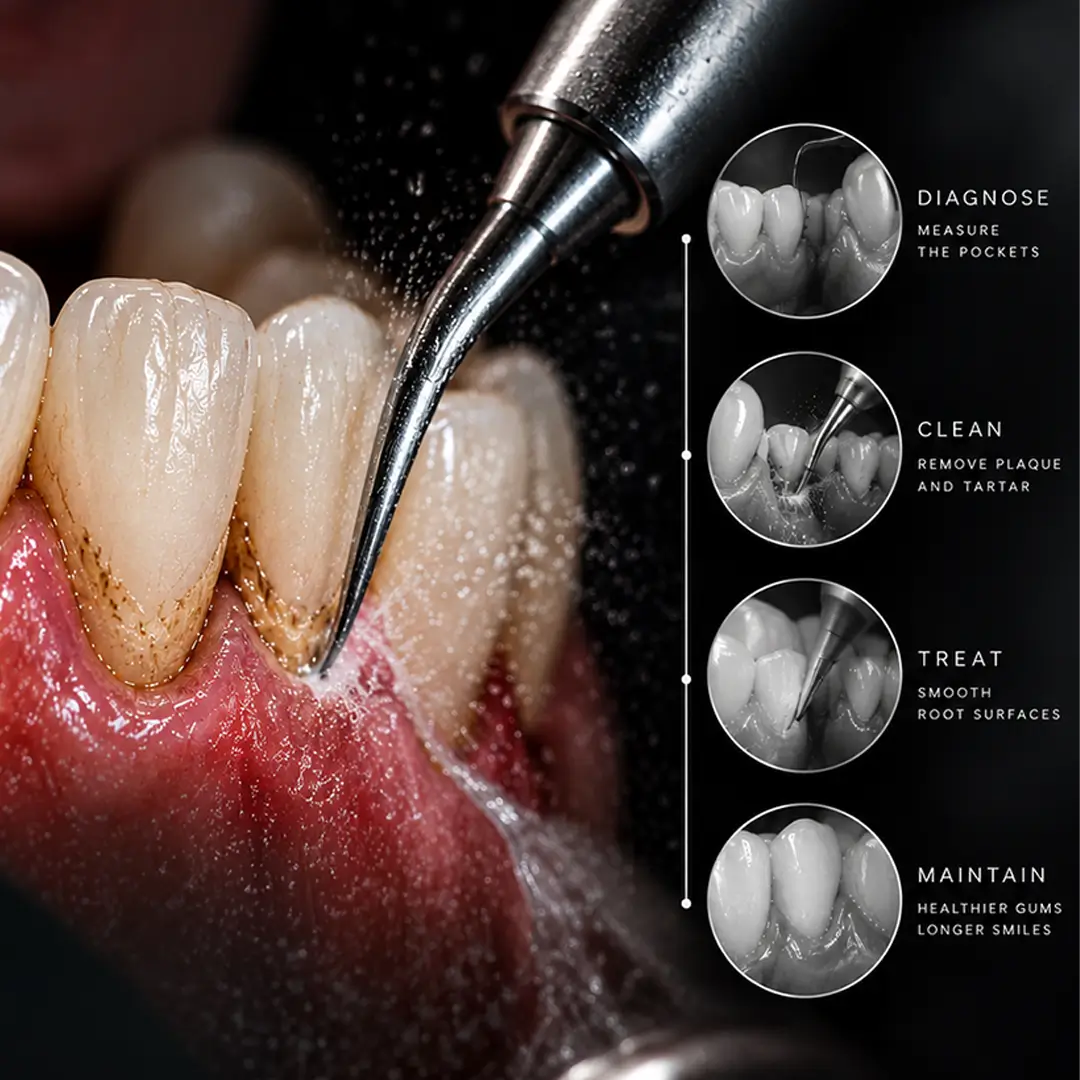
Clinical gum disease treatment follows a stepped protocol. Step 1 covers charting plus risk factor control. Step 2 is scaling and root planing under local anaesthetic. Step 3 reassesses after 8 weeks and adds surgery for pockets still measuring above 5 mm. Step 4 is maintenance cleaning every 4 months.
The European Federation of Periodontology S3 guideline by Sanz et al in the Journal of Clinical Periodontology sets out exactly the same sequence for stage I to III disease. Our periodontal department follows that order without shortcuts. Subgingival instrumentation usually runs across two extended appointments using ultrasonic and hand instruments. Where a tooth carries both infection and gum loss, root canal treatment by endodontic specialists is sequenced before periodontal surgery. Long term stability sits with our gum disease treatment and periodontal care programme. International Plus holds official Ministry of Health authorization alongside 5,504 verified reviews at 4.8 out of 5.
How Do You Stop Gum Disease Coming Back?
Prevention after treatment rests on three habits. Clean between the teeth every single day. Attend maintenance cleaning every 4 months rather than once a year. Stop smoking. Recurrence is far more common among patients who drift back to six-monthly recalls after active periodontal therapy.
Relapse usually starts in a handful of hard-to-reach sites rather than across the whole mouth. Interdental brushes sized to each gap remove more plaque than floss once attachment has been lost because the spaces are wider. Night-time clenching loads weakened support so patients managing teeth grinding benefit from a guard alongside periodontal maintenance. Aching around a treated tooth deserves prompt review. A chart plus a radiograph separates gum origin from ordinary tooth pain. More than 200,000 patients from 140+ countries have been treated here in 21 languages, which makes staged gum disease care practical to organise from abroad. Individual results vary so a personalised assessment remains the right next step.
Book your gum health consultation with the International Plus coordination team.
Frequently Asked Questions
What are the first signs of gum disease?
Bleeding when brushing or flossing is the first reliable sign of gum disease. Gums may also look red and swollen rather than firm and pale pink, feel tender along the margin or leave a metallic taste. Bad breath returning quickly after brushing often accompanies these early changes.
Can gum disease be reversed at home?
Gingivitis can be reversed at home through thorough daily plaque removal and bleeding usually settles within two weeks. Periodontitis cannot because hardened tartar below the gum line only comes off with professional instruments. Bleeding continuing past three weeks of good technique means a dental assessment is needed.
How long does it take to treat gum disease?
Gingivitis typically resolves within two to four weeks of professional cleaning and improved home care. Periodontitis treatment runs longer: scaling and root planing over one or two appointments, then reassessment at eight weeks. Surgical steps and lifelong maintenance cleaning every three to four months follow where pockets persist.
Is gum disease contagious?
The bacteria involved in gum disease can transfer between people through saliva so sharing utensils or kissing may pass them on. Catching those bacteria does not mean catching the disease because susceptibility depends on immune response, smoking status and daily plaque control rather than exposure alone.
What is the best mouthwash for gum disease?
Chlorhexidine rinse is the most effective option for short courses of two to four weeks after deep cleaning. For daily use, a cetylpyridinium chloride or essential-oil rinse is more appropriate. Any rinse works only as an addition to brushing and interdental cleaning, never as a substitute for professional treatment.
Does gum disease always lead to tooth loss?
No. Treated at the gingivitis stage, gum disease causes no permanent damage at all. Even established periodontitis can be stabilised for decades when pockets are cleaned properly and maintenance visits are kept. Tooth loss becomes likely only when advanced bone loss goes untreated for years.
Reviewed by Dr. Alper Çağlayan Sarraf
References
- Sanz M, et al. J Clin Periodontol. 2020. PMC7891343
- Papapanou PN, et al. J Periodontol. 2018. PMID: 29926951
- Chapple ILC, et al. J Periodontol. 2018. PMID: 29926944
- James P, et al. Cochrane Database Syst Rev. 2017. PMC6464488
- Arbildo-Vega HI, et al. BMC Oral Health. 2024. PMC11520879
- Kim JY, et al. Mol Cells. 2024. PMC11612374
- Zhang M, et al. Front Immunol. 2024. PMC11196616
- Hashim NT, et al. Int J Environ Res Public Health. 2025. PMC12027323
Follow us on Social Media
internationalplusofficial
internationalplus
internationalplusdental
This content is written, reviewed, and approved by the International Plus Medical Review Board to ensure clinical accuracy and adherence to strict editorial standards. All medical information is regularly monitored, audited and updated in light of the latest scientific advancements.
However the information provided here is for general informational purposes only and cannot be used for self diagnosis or making individual health interpretations. Results of medical treatments depend on individual anatomy and the unique healing process of each patient. This information should not replace a personal consultation with a qualified healthcare professional. To understand the best options for your specific needs and to receive a personalized treatment plan, we invite you to book a free consultation with the expert medical team at International Plus.

Dr. Alper Çağlayan Sarraf directs the oral surgery unit at InternationalPlus Istanbul, focusing on demanding cases that draw patients from every corner of the world.