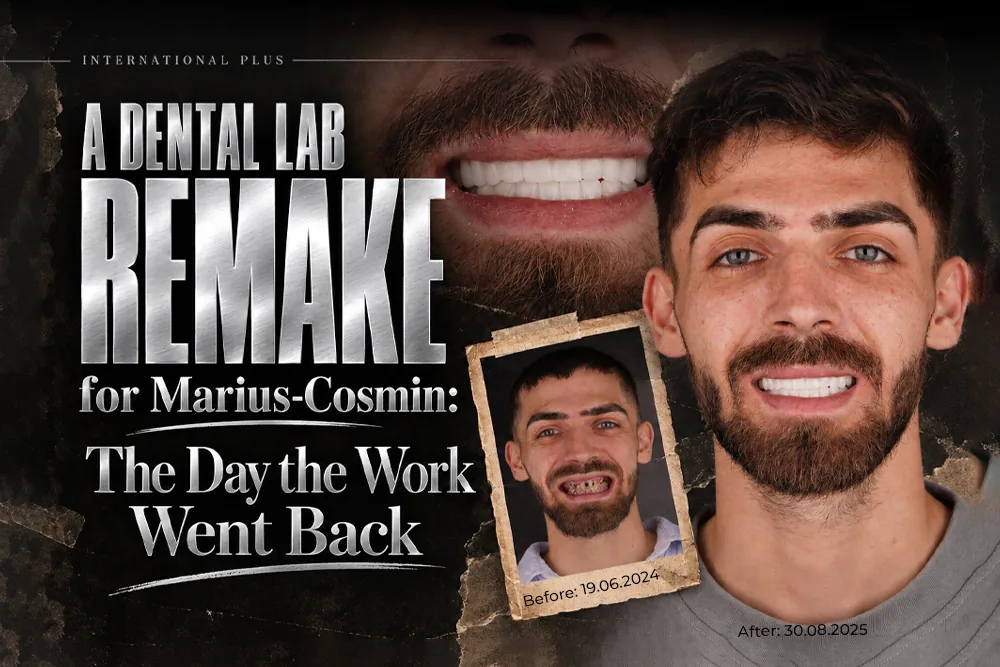
A dental lab remake is what happens when a restoration reaches try in and is judged not good enough to fit. Marius-Cosmin was treated at International Plus as a Romanian speaking patient and his file records five working days in which the finish was rejected and the case was returned to the laboratory. Most case studies stop at delivery. This one follows the step that usually goes unmentioned.
Key Takeaways
- The challenge: A zirconia rehabilitation where the finish was not accepted at the last recorded try in.
- The solution: The work was returned to the on-site laboratory rather than cemented and the staged try in sequence was repeated.
- The technique: Plastic try in, face scanning and a dentin try in, each with the bite checked and adjusted before the next stage.
- The outcome: Five working days recorded in the file, including the day the case went back.
What a Dental Lab Remake Actually Is
A remake is a restoration rebuilt from the design stage after being rejected at a clinical stage. It is not a repair and it is not an adjustment. The existing work is set aside and the laboratory starts again from the approved record.
Research on evaluation phases in restorative dentistry supports checking a rehabilitation before it is made permanent rather than after (Chantler J, et al., 2025). A try in exists so that a problem can be identified while the restoration is still unfinished. Our clinic treats a rejection at try in as the protocol working rather than as a failure.
For example, the alternative is a restoration cemented with a known compromise, which costs the patient far more later. Readers wanting the general picture can see how a new smile is planned before treatment begins.
The Five Days Recorded in Marius-Cosmin’s File
Most treatment records list what was completed. A treatment log is a record kept by date rather than by procedure so it can be read as a sequence instead of as a summary of a finished case.
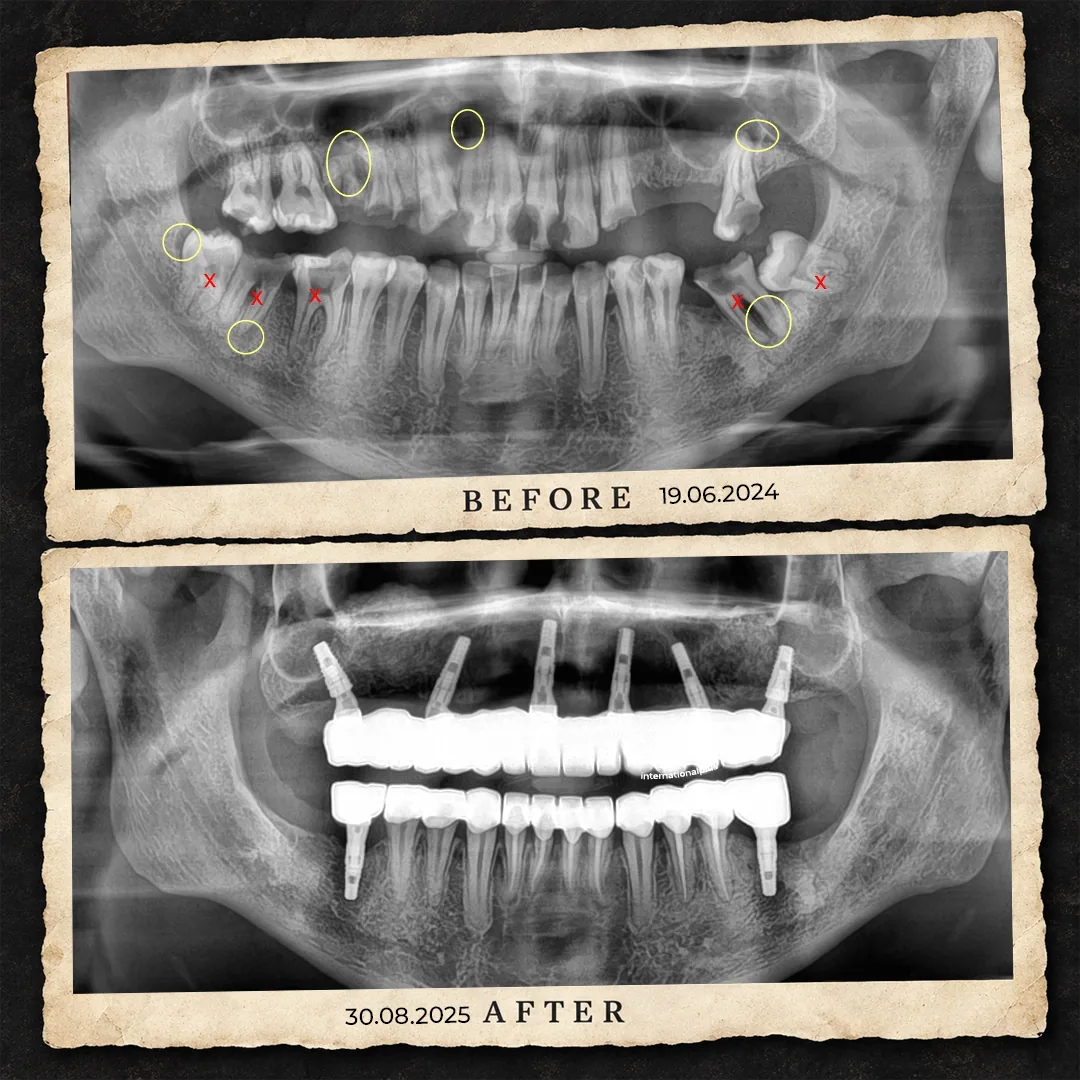
Five working days are documented between the implant uncovering and the remake. Each entry names the stage reached and the decision taken at the end of it. Clinical evidence on digital smile design workflows describes the same staged structure of record, design and verification (Ntovas P, et al., 2023).
Our clinic writes each stage into the file before the following appointment begins. For example, the entry for 29 August names a decision rather than a procedure, which is the kind of detail a summary written after delivery would quietly drop.
| Date | Recorded stage |
|—|—|
| 22 August | Implant sites uncovered, teeth prepared, digital impression taken |
| 26 August | Plastic try in, face scan recorded, bite adjusted |
| 28 August | Dentin try in, bite adjusted again, finish requested |
| 29 August | Finish not accepted, case returned to the laboratory |
| 30 August | Treatment continued |
Uncovering, Preparation and the Digital Impression
The first recorded day covers three stages at once. Implant uncovering is the minor procedure that exposes an implant which has been healing beneath the gum so a restoration can be connected to it.
Preparation of the remaining teeth and a digital impression followed in the same visit. A digital impression records the mouth with an intraoral scanner rather than with a tray of setting material, which removes the dimensional change that physical impression materials undergo during setting and transport. Evidence comparing complete arch digital impression methods has been reviewed systematically (Pozzi A, et al., 2025).
In practice our clinic takes the impression only after the sites are uncovered and the teeth are prepared because the scan has to record the mouth in the shape the restoration will meet. Implant treatment at the clinic is covered under dental implant.
Plastic Try In, Face Scanning and the Dentin Try In
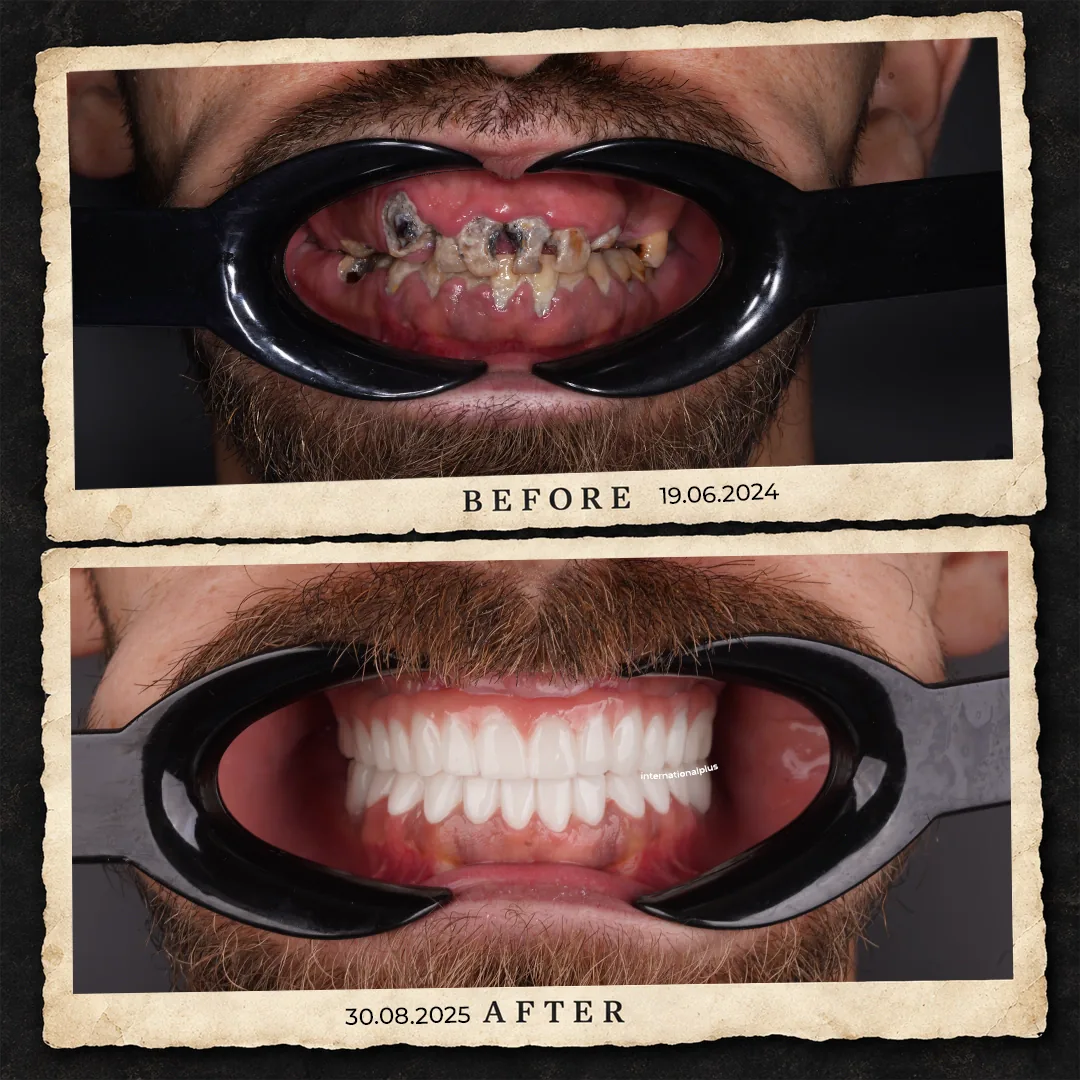
A try in is a stage where an unfinished restoration is placed in the mouth and assessed before it is completed. The record lists two of them on 26 and 28 August with a face scan taken at the first.
The plastic try in came first on 26 August with the bite adjusted at that appointment. A face scan was recorded the same day. Face scanning captures the restoration in the context of the whole face rather than the mouth alone, which matters because a smile is judged in a face and not on a model. Virtual smile design systems have been reviewed for exactly this purpose (Zimmermann M, et al., 2015).
Then the dentin try in followed on 28 August with the bite adjusted again. Clinical evidence on evaluating an altered bite before finishing supports repeating that check rather than assuming it (Lassmann L, et al., 2025).
The Day the Case Went Back to the Laboratory
On 29 August the finish was requested and not accepted. The file records that the work was returned to the laboratory rather than delivered, which is the entry most treatment records never contain.
Rejection at try in is a documented decision to rebuild rather than to adjust. Returning a case costs time and it costs a patient appointment but the record shows that decision taken because a restoration cemented with a known problem has to be cut off later.
According to reviews of rehabilitation strategy, an evaluation stage exists so that an altered bite is confirmed before it becomes permanent (Ioannidis A, et al., 2025). In practice our clinic’s laboratory sits on the same site as the treatment rooms, which is what makes the decision practical. A case sent abroad would face a shipping cycle instead of a corridor. Restorations of this type are covered under dental crowns.
What the Record Shows
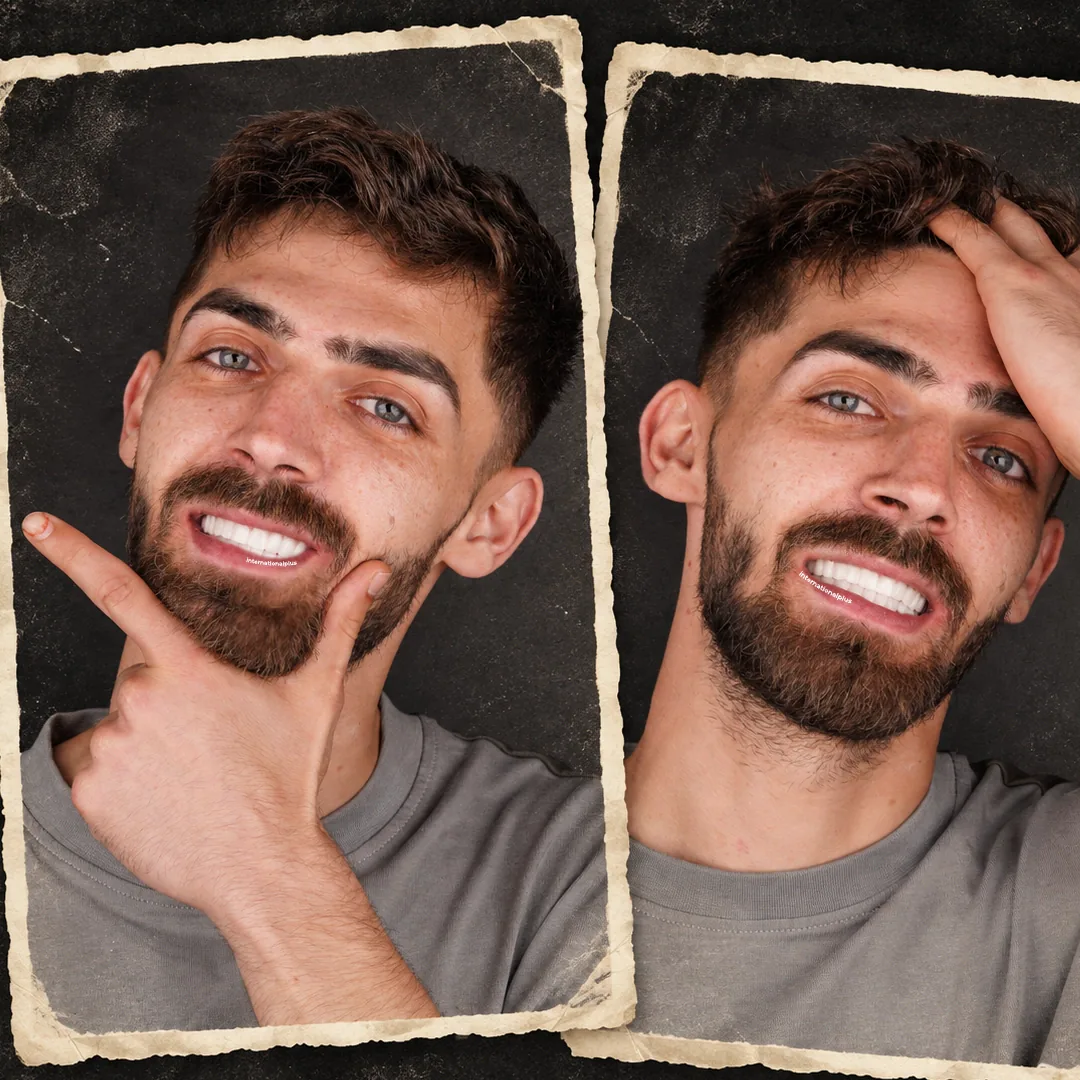
Marius-Cosmin’s file documents a rehabilitation planned with face scanning in the clinic’s Plus 5 smile design style, built in shade Ow3 with a night guard recorded in the plan. The design stages are recorded individually rather than summarised.
What makes this record useful is the entry on 29 August. A case study that shows only successful stages describes an outcome. A record that includes a rejected finish describes a protocol. Comparable staged verification is documented in our two stage try in case and in our screw retained rehabilitation case.
This is one patient’s recorded outcome and individual results may vary. International Plus has treated more than 200,000 patients from 140+ countries since 2014 and holds a rating of 4.8 out of 5 across 5,504 reviews. No clinic can promise an identical sequence because every case reaches try in with a different starting point.
Book a consultation with International Plus if you want to know how your own case would be verified before anything is made permanent.
Frequently Asked Questions
What does a dental lab remake mean for the patient?
It means the restoration is rebuilt rather than adjusted. A patient generally keeps a provisional restoration and attends an additional appointment once the new work is ready. Where the laboratory is on the same site as the clinic, the delay is usually measured in days rather than in weeks of international shipping.
Is a remake a sign that something went wrong?
A remake is the try in protocol doing its job. The stage exists so a problem can be identified while the restoration is still unfinished and inexpensive to rebuild. The alternative, cementing a restoration with a known compromise, costs considerably more to correct once it is permanent.
What is the difference between a plastic and a dentin try in?
A plastic try in checks shape, length and the bite using a provisional material. A dentin try in uses the ceramic core before the final layers are completed so fit and the underlying shade can be assessed. Each stage answers a different question about the same restoration.
Why is the bite checked at every try in stage?
Because adjustments made at one stage change the relationship at the next. The record for this case lists the bite adjusted at both try in appointments. Checking once and assuming the result holds through later stages is how a verified fit quietly becomes an unverified one.
Why was a face scan recorded during treatment?
A face scan captures the restoration in the context of the whole face rather than on a model alone. Smile proportion is judged against facial landmarks such as the midline and the lip line. The scan gives the laboratory a reference that an intraoral impression on its own cannot provide.
Reviewed by Dr. Eren Gülbahar
References
- Chantler J, et al. J Esthet Restor Dent. 2025. PMC12076109
- Lassmann Ł, et al. J Esthet Restor Dent. 2025. PMID: 39189329
- Ioannidis A, et al. J Esthet Restor Dent. 2025. PMID: 39931975
- Ntovas P, et al. Int J Esthet Dent. 2023. PMID: 37819562
- Zimmermann M, et al. Int J Comput Dent. 2015. PMID: 26734665
- Pozzi A, et al. Clin Implant Dent Relat Res. 2025. PMC12144927
Follow us on Social Media
internationalplusofficial
internationalplus
internationalplusdental
This content is written, reviewed, and approved by the International Plus Medical Review Board to ensure clinical accuracy and adherence to strict editorial standards. All medical information is regularly monitored, audited and updated in light of the latest scientific advancements.
However the information provided here is for general informational purposes only and cannot be used for self diagnosis or making individual health interpretations. Results of medical treatments depend on individual anatomy and the unique healing process of each patient. This information should not replace a personal consultation with a qualified healthcare professional. To understand the best options for your specific needs and to receive a personalized treatment plan, we invite you to book a free consultation with the expert medical team at International Plus.
I am a healthcare professional with over 4 years of experience in dentistry, specializing in prosthetic dental treatment and implant-based applications. Since 2024, I have been serving as chief physician, leading clinical management, team coordination, and international patient processes. With my B2-level English proficiency, I am able to communicate effectively with international patients. I am a patient-centered, innovative, and solution-oriented dentist who prioritizes patient satisfaction.